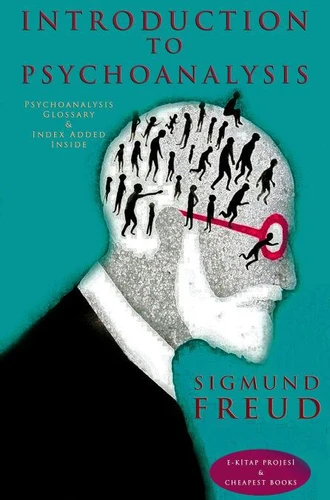
Sigmund Freud (Born Sigismund Schlomo Freud; (1856 1939) was an Austrian neurologist who became known as the founding father of psychoanalysis.
Introduction to Psychoanalysis. [Psychoanalysis Glossary & Index Added Inside]
Par :Formats :
Disponible dans votre compte client Decitre ou Furet du Nord dès validation de votre commande. Le format ePub est :
- Compatible avec une lecture sur My Vivlio (smartphone, tablette, ordinateur)
- Compatible avec une lecture sur liseuses Vivlio
- Pour les liseuses autres que Vivlio, vous devez utiliser le logiciel Adobe Digital Edition. Non compatible avec la lecture sur les liseuses Kindle, Remarkable et Sony
 , qui est-ce ?
Notre partenaire de plateforme de lecture numérique où vous retrouverez l'ensemble de vos ebooks gratuitement
Pour en savoir plus sur nos ebooks, consultez notre aide en ligne ici
C'est si simple ! Lisez votre ebook avec l'app Vivlio sur votre tablette, mobile ou ordinateur :

- Nombre de pages500
- FormatePub
- ISBN978-615-5529-29-0
- EAN9786155529290
- Date de parution15/02/2024
- Protection num.Digital Watermarking
- Taille2 Mo
- Infos supplémentairesepub
- ÉditeurE-Kitap Projesi & Cheapest Boo
Résumé
Development of psychoanalysis:
Charcot demonstrates hypnosis on a "hysterical" patient, "Blanche" (Blanche Wittmann). Charcot questioned his own work on hysteria towards the end of his life.
In October 1885, Freud went to Paris on a fellowship to study with Jean-Martin Charcot, a renowned neurologist who was conducting scientific research into hypnosis. He was later to recall the experience of this stay as catalytic in turning him toward the practice of medical psychopathology and away from a less financially promising career in neurology research.
Charcot specialized in the study of hysteria and susceptibility to hypnosis, which he frequently demonstrated with patients on stage in front of an audience. In this Illustrated psychology series, our the first book volume includes that Freud's eventually establishes in the course of his clinical practice that a more consistent and effective pattern of symptom relief could be achieved, without recourse to hypnosis, by encouraging patients to talk freely about whatever ideas or memories occurred to them.
In addition to this procedure, which he called "free association", Freud found that patient's dreams could be fruitfully analyzed to reveal the complex structuring of unconscious material and to demonstrate the psychic action of repression which underlay symptom formation. By 1896, Freud had abandoned hypnosis and was using the term "psychoanalysis" to refer to his new clinical method and the theories on which it was based... Illustrated by Murat Ukray, Copyright by E-Kitap Projesi
Charcot specialized in the study of hysteria and susceptibility to hypnosis, which he frequently demonstrated with patients on stage in front of an audience. In this Illustrated psychology series, our the first book volume includes that Freud's eventually establishes in the course of his clinical practice that a more consistent and effective pattern of symptom relief could be achieved, without recourse to hypnosis, by encouraging patients to talk freely about whatever ideas or memories occurred to them.
In addition to this procedure, which he called "free association", Freud found that patient's dreams could be fruitfully analyzed to reveal the complex structuring of unconscious material and to demonstrate the psychic action of repression which underlay symptom formation. By 1896, Freud had abandoned hypnosis and was using the term "psychoanalysis" to refer to his new clinical method and the theories on which it was based... Illustrated by Murat Ukray, Copyright by E-Kitap Projesi
A propos de Sigmund Freud
0,99 €

1,99 €
1,99 €
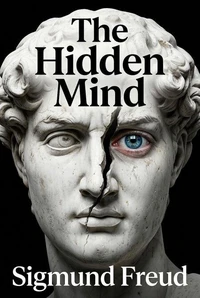
The Hidden Mind
E-book
6,99 €

Why We Forget Things
E-book
5,49 €

5,49 €

Forbidden Desires
E-book
4,49 €

The Meaning of Dreams
E-book
4,49 €

Mind Under Fire
E-book
2,99 €

Life Beyond Pleasure
E-book
2,99 €

The Sleeping Mind
E-book
4,49 €

0,99 €


6,99 €