Mary Jane Logan McCallum is a Professor in the Department of History at University of Winnipeg.
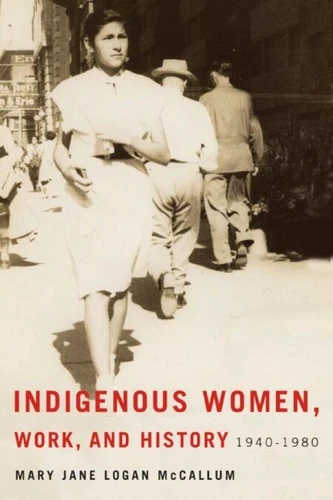
Indigenous Women, Work, and History. 1940-1980
Par :Formats :
Disponible dans votre compte client Decitre ou Furet du Nord dès validation de votre commande. Le format ePub est :
- Compatible avec une lecture sur My Vivlio (smartphone, tablette, ordinateur)
- Compatible avec une lecture sur liseuses Vivlio
- Pour les liseuses autres que Vivlio, vous devez utiliser le logiciel Adobe Digital Edition. Non compatible avec la lecture sur les liseuses Kindle, Remarkable et Sony
 , qui est-ce ?
Notre partenaire de plateforme de lecture numérique où vous retrouverez l'ensemble de vos ebooks gratuitement
Pour en savoir plus sur nos ebooks, consultez notre aide en ligne ici
C'est si simple ! Lisez votre ebook avec l'app Vivlio sur votre tablette, mobile ou ordinateur :

- Nombre de pages288
- FormatePub
- ISBN978-0-88755-432-2
- EAN9780887554322
- Date de parution02/05/2014
- Protection num.Digital Watermarking
- Taille5 Mo
- Infos supplémentairesepub
- ÉditeurUniversity of Manitoba Press
Résumé
When dealing with Indigenous women's history we are conditioned to think about women as private-sphere figures, circumscribed by the home, the reserve, and the community. Moreover, in many ways Indigenous men and women have been cast in static, pre-modern, and one-dimensional identities, and their twentieth century experiences reduced to a singular story of decline and loss.
In Indigenous Women, Work, and History, historian Mary Jane Logan McCallum rejects both of these long-standing conventions by presenting case studies of Indigenous domestic servants, hairdressers, community health representatives, and nurses working in "modern Native ways" between 1940 and 1980.
Based on a range of sources, including the records of the Departments of Indian Affairs and National Health and Welfare, interviews, and print and audio-visual media, McCallum shows how state-run education and placement programs were part of Canada's larger vision of assimilation and extinguishment of treaty obligations. Conversely, she also shows how Indigenous women link these same programs to their social and cultural responsibilities of community building and state resistance.
By placing the history of these modern workers within a broader historical context of Aboriginal education and health, federal labour programs, post-war Aboriginal economic and political developments, and Aboriginal professional organizations, McCallum challenges us to think about Indigenous women's history in entirely new ways.
Based on a range of sources, including the records of the Departments of Indian Affairs and National Health and Welfare, interviews, and print and audio-visual media, McCallum shows how state-run education and placement programs were part of Canada's larger vision of assimilation and extinguishment of treaty obligations. Conversely, she also shows how Indigenous women link these same programs to their social and cultural responsibilities of community building and state resistance.
By placing the history of these modern workers within a broader historical context of Aboriginal education and health, federal labour programs, post-war Aboriginal economic and political developments, and Aboriginal professional organizations, McCallum challenges us to think about Indigenous women's history in entirely new ways.
A propos de Mary Jane Logan McCallum
Brown Tom's Schooldays
E-book
16,99 €