SOLDES
Jusqu'à -70% sur une sélection d'articles*

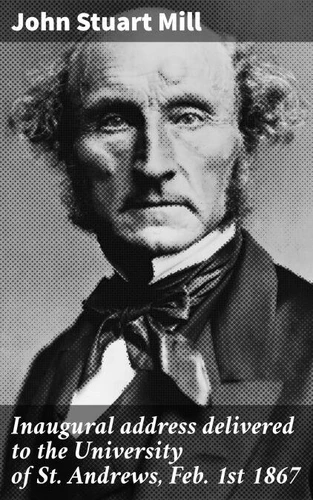
Inaugural address delivered to the University of St. Andrews, Feb. 1st 1867. Championing Education: A Timeless Discourse on Knowledge and Autonomy
Par :Formats :
Disponible dans votre compte client Decitre ou Furet du Nord dès validation de votre commande. Le format ePub est :
- Compatible avec une lecture sur My Vivlio (smartphone, tablette, ordinateur)
- Compatible avec une lecture sur liseuses Vivlio
- Pour les liseuses autres que Vivlio, vous devez utiliser le logiciel Adobe Digital Edition. Non compatible avec la lecture sur les liseuses Kindle, Remarkable et Sony
 , qui est-ce ?
Notre partenaire de plateforme de lecture numérique où vous retrouverez l'ensemble de vos ebooks gratuitement
Pour en savoir plus sur nos ebooks, consultez notre aide en ligne ici
C'est si simple ! Lisez votre ebook avec l'app Vivlio sur votre tablette, mobile ou ordinateur :

- Nombre de pages57
- FormatePub
- ISBN406-4-06-606726-7
- EAN4064066067267
- Date de parution08/12/2020
- Protection num.Digital Watermarking
- Taille569 Ko
- Infos supplémentairesepub
- ÉditeurGOOD PRESS
Résumé
In his Inaugural Address delivered to the University of St. Andrews on February 1, 1867, John Stuart Mill presents a profound reflection on the goals of higher education and the responsibilities of the intellectual community. Mill articulates the need for universities to cultivate not only knowledge but also critical thinking, character, and moral development within their students. His eloquent literary style blends philosophical rigor with accessible language, situated within the broader Victorian context of burgeoning intellectual and social reform.
The address serves as a clarion call for the importance of education as a means to elevate society and address pressing social issues of the time. John Stuart Mill was an eminent philosopher and political economist whose works laid the foundations for modern liberal thought. Influenced by his father, James Mill, and the broader 19th-century debates on empiricism and utilitarianism, Mill experienced the transformative power of education early in life.
His unique experiences, including his advocacy for women's rights and social justice, informed his ideals presented in this address, emphasizing the need for an educational system that fosters individual empowerment. Mill's Inaugural Address is a must-read for scholars, educators, and anyone interested in the intersections between philosophy, education, and society. It challenges contemporary readers to reconsider their views on the purpose of education and encourages an active engagement with the evolving moral and ethical dilemmas facing humanity.
This text is a timeless reflection on the role of academia in shaping both the mind and spirit of individuals.
The address serves as a clarion call for the importance of education as a means to elevate society and address pressing social issues of the time. John Stuart Mill was an eminent philosopher and political economist whose works laid the foundations for modern liberal thought. Influenced by his father, James Mill, and the broader 19th-century debates on empiricism and utilitarianism, Mill experienced the transformative power of education early in life.
His unique experiences, including his advocacy for women's rights and social justice, informed his ideals presented in this address, emphasizing the need for an educational system that fosters individual empowerment. Mill's Inaugural Address is a must-read for scholars, educators, and anyone interested in the intersections between philosophy, education, and society. It challenges contemporary readers to reconsider their views on the purpose of education and encourages an active engagement with the evolving moral and ethical dilemmas facing humanity.
This text is a timeless reflection on the role of academia in shaping both the mind and spirit of individuals.
A propos de John Stuart Mill







0,99 €
Vapaudesta
E-book
1,99 €

1,99 €
The Subjection of Women
E-book
1,99 €

1,99 €
0,99 €
0,99 €


The Subjection Of Women (Unabridged)
Audiobook
2,99 €