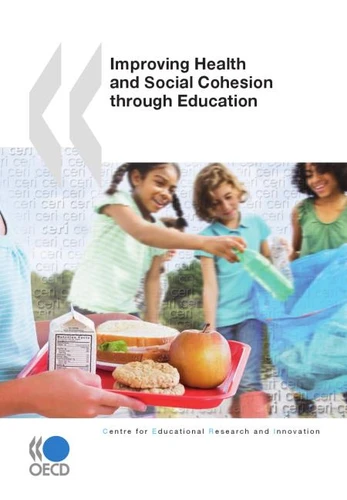
Improving Health and Social Cohesion through Education
Par :Formats :
Disponible dans votre compte client Decitre ou Furet du Nord dès validation de votre commande. Le format Multi-format est :
- Pour les liseuses autres que Vivlio, vous devez utiliser le logiciel Adobe Digital Edition. Non compatible avec la lecture sur les liseuses Kindle, Remarkable et Sony
 , qui est-ce ?
Notre partenaire de plateforme de lecture numérique où vous retrouverez l'ensemble de vos ebooks gratuitement
Pour en savoir plus sur nos ebooks, consultez notre aide en ligne ici
C'est si simple ! Lisez votre ebook avec l'app Vivlio sur votre tablette, mobile ou ordinateur :

- Nombre de pages200
- FormatMulti-format
- ISBN978-92-64-08631-9
- EAN9789264086319
- Date de parution17/09/2010
- Protection num.pas de protection
- Infos supplémentairesMulti-Format
- ÉditeurOECD
Résumé
Today's global policy climate underlines the importance of better addressing non-economic dimensions of well-being and social progress such as health, social engagement, political interest and crime. Education plays an important role in shaping indicators of progress. However, we understand little about the causal effects, the causal pathways, the role of contexts and the relative impacts that different educational interventions have on social outcomes.
This report addresses challenges in assessing the social outcomes of learning by providing a synthesis of the existing evidence, original data analyses and policy discussions. The report finds that education has the potential to promote health as well as civic and social engagement. Education may reduce inequalities by fostering cognitive, social and emotional skills and promoting healthy lifestyles, participatory practices and norms.
These efforts are most likely to be successful when family and community environments are aligned with the efforts made in educational institutions. This calls for ensuring policy coherence across sectors and stages of education.
This report addresses challenges in assessing the social outcomes of learning by providing a synthesis of the existing evidence, original data analyses and policy discussions. The report finds that education has the potential to promote health as well as civic and social engagement. Education may reduce inequalities by fostering cognitive, social and emotional skills and promoting healthy lifestyles, participatory practices and norms.
These efforts are most likely to be successful when family and community environments are aligned with the efforts made in educational institutions. This calls for ensuring policy coherence across sectors and stages of education.