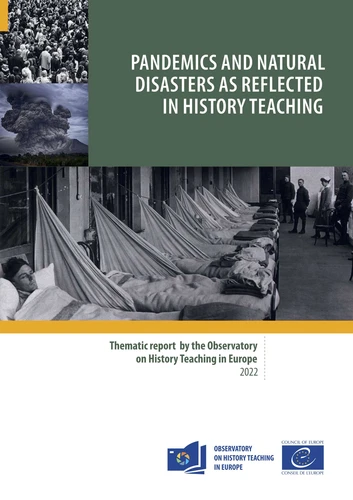
Pandemics and natural disasters as reflected in history teaching
Par :Formats :
Disponible dans votre compte client Decitre ou Furet du Nord dès validation de votre commande. Le format ePub est :
- Compatible avec une lecture sur My Vivlio (smartphone, tablette, ordinateur)
- Compatible avec une lecture sur liseuses Vivlio
- Pour les liseuses autres que Vivlio, vous devez utiliser le logiciel Adobe Digital Edition. Non compatible avec la lecture sur les liseuses Kindle, Remarkable et Sony
 , qui est-ce ?
Notre partenaire de plateforme de lecture numérique où vous retrouverez l'ensemble de vos ebooks gratuitement
Pour en savoir plus sur nos ebooks, consultez notre aide en ligne ici
C'est si simple ! Lisez votre ebook avec l'app Vivlio sur votre tablette, mobile ou ordinateur :

- FormatePub
- ISBN978-92-871-9413-8
- EAN9789287194138
- Date de parution01/03/2023
- Protection num.pas de protection
- Infos supplémentairesepub
- ÉditeurCouncil of Europe
Résumé
Covid-19, disastrous series of earthquakes in Türkiye and Syria... How well prepared are young people to understand such catastrophic events and their impact upon societies?
Since the beginning of recorded human history, pandemics and natural disasters have highly impacted the historical narratives of mankind. Each time, they remind humans how fragile they are and how limited their knowledge is.
Despite their impact, these events are given little attention in history education. The first thematic report of the Observatory on History Teaching in Europe (OHTE) analyses how pandemics and natural disasters are taught across different levels of education. It gives a detailed overview of the teaching of the two topics in OHTE's 16 member states, along with a cross country analysis - combining information provided by educational authorities and by history teachers themselves. The report refers to important areas of concern such as the inclusion of pandemics and natural disasters in history curricula, teachers' pedagogical decisions about their teaching, multiperspectival approaches but also the use of scapegoating during these times of crises. The observatory's mission is to provide a clear picture of the state of history teaching in Europe.
Within the countries that are party to the observatory, this is done through OHTE reports on the state of history teaching and thematic reports, which explore particular areas of interest and how they are handled in history lessons. The observatory's vision is embodied by its motto: "Teaching history, grounding democracy". In practice, this means that it promotes quality history education in order to improve the understanding of democratic culture among young people.
The Observatory on History Teaching in Europe is a Council of Europe enlarged partial agreement.
Despite their impact, these events are given little attention in history education. The first thematic report of the Observatory on History Teaching in Europe (OHTE) analyses how pandemics and natural disasters are taught across different levels of education. It gives a detailed overview of the teaching of the two topics in OHTE's 16 member states, along with a cross country analysis - combining information provided by educational authorities and by history teachers themselves. The report refers to important areas of concern such as the inclusion of pandemics and natural disasters in history curricula, teachers' pedagogical decisions about their teaching, multiperspectival approaches but also the use of scapegoating during these times of crises. The observatory's mission is to provide a clear picture of the state of history teaching in Europe.
Within the countries that are party to the observatory, this is done through OHTE reports on the state of history teaching and thematic reports, which explore particular areas of interest and how they are handled in history lessons. The observatory's vision is embodied by its motto: "Teaching history, grounding democracy". In practice, this means that it promotes quality history education in order to improve the understanding of democratic culture among young people.
The Observatory on History Teaching in Europe is a Council of Europe enlarged partial agreement.