Nouveauté
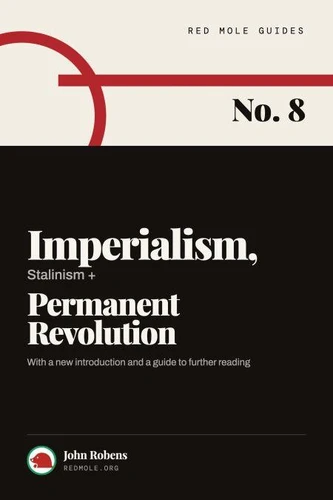
Imperialism, Stalinism and Permanent Revolution. Red Mole Guides, #8
Par : ,Formats :
Disponible dans votre compte client Decitre ou Furet du Nord dès validation de votre commande. Le format ePub est :
- Compatible avec une lecture sur My Vivlio (smartphone, tablette, ordinateur)
- Compatible avec une lecture sur liseuses Vivlio
- Pour les liseuses autres que Vivlio, vous devez utiliser le logiciel Adobe Digital Edition. Non compatible avec la lecture sur les liseuses Kindle, Remarkable et Sony
 , qui est-ce ?
Notre partenaire de plateforme de lecture numérique où vous retrouverez l'ensemble de vos ebooks gratuitement
Pour en savoir plus sur nos ebooks, consultez notre aide en ligne ici
C'est si simple ! Lisez votre ebook avec l'app Vivlio sur votre tablette, mobile ou ordinateur :

- FormatePub
- ISBN8233423055
- EAN9798233423055
- Date de parution09/08/2026
- Protection num.pas de protection
- Infos supplémentairesepub
- ÉditeurLinda Balsamo
Résumé
In 1973 the British International Marxist Group issued a forty-pence pamphlet that tried to do something unusually ambitious: not to retell the story of permanent revolution, but to prove it - to derive Trotsky's theory from Marx's own economics of the world market. The result is one of the boldest short statements the Trotskyist tradition produced. Across five tightly argued sections, "John Robens" grounds permanent revolution in the law of uneven and combined development, then follows it outward - into the colonial revolutions of China, Cuba, Vietnam and Bengal; into a forensic Marxist anatomy of the post-war "long boom" and the crisis of the dollar; and into the contradictions of the Soviet economy and the bureaucracy that rules it.
Everywhere the same charge recurs: Stalinism and social democracy fail because they reason like empiricists, reading the world back-to-front, while only the theory of permanent revolution grasps the world economy as a single, living whole. Written on the eve of the 1973 oil shock - at the very hinge of the boom it dissects - the pamphlet is both a period document of remarkable confidence and a genuinely searching piece of theory.
It is unusually candid, too: it concedes where Trotsky's forecasts failed, and keeps only what survives. This new edition restores the long-out-of-print text from the original scan and adds a critical introduction - weighing what is conventional, what is surprising, and what is missing in its account - together with a guide to further reading that runs from Trotsky's Results and Prospects through the expositions of Ernest Mandel, Pierre Frank and Livio Maitan, and back to the pamphlet's own hidden source, the French economist Jacques Valier.
A rigorous, self-aware argument that history went on to test more severely than its author could have known - and a bracing introduction to why permanent revolution still asks the questions it does.
Everywhere the same charge recurs: Stalinism and social democracy fail because they reason like empiricists, reading the world back-to-front, while only the theory of permanent revolution grasps the world economy as a single, living whole. Written on the eve of the 1973 oil shock - at the very hinge of the boom it dissects - the pamphlet is both a period document of remarkable confidence and a genuinely searching piece of theory.
It is unusually candid, too: it concedes where Trotsky's forecasts failed, and keeps only what survives. This new edition restores the long-out-of-print text from the original scan and adds a critical introduction - weighing what is conventional, what is surprising, and what is missing in its account - together with a guide to further reading that runs from Trotsky's Results and Prospects through the expositions of Ernest Mandel, Pierre Frank and Livio Maitan, and back to the pamphlet's own hidden source, the French economist Jacques Valier.
A rigorous, self-aware argument that history went on to test more severely than its author could have known - and a bracing introduction to why permanent revolution still asks the questions it does.