- Accueil /
- Red Mole Substack
Red Mole Substack

Dernière sortie
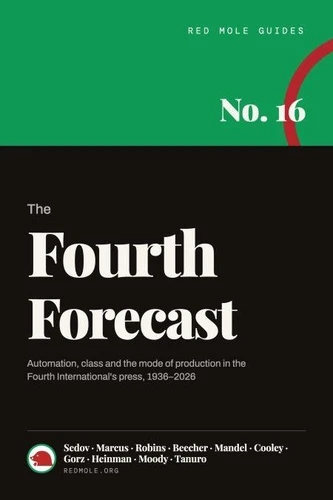
The Fourth Forecast: Automation, class and the mode of production in the Fourth International's press, 1936-2026
In the first six months of 2026, employers in the United States named artificial intelligence as the reason for more than a hundred thousand announced job cuts. Almost every argument about what that means takes the same shape, whether it comes from the technology companies, from governments, or from the left: establish what the machine can do, how fast it can do it, and how many jobs it will take, and the politics are supposed to follow.
The Fourth International has made exactly that forecast four times. It made it in 1954, in the first sustained Marxist treatment of automation. It made it in 1962, when the office was identified as the cheapest place in the economy to automate and the arrival of the first computers was counted job by job. It made it in 1984, in a report from inside the West German car plants which concluded that the future belonged to factories empty of people.
It is making it now. Every one of those forecasts was wrong, in both directions. And every time, what actually decided the outcome was not in the forecast at all. The Fourth Forecast gathers nineteen documents from ninety years of the Fourth International's press, with an argued introduction and a reader's headnote to each. At its centre is a survey from 1962 in which Ed Beecher followed three American unions meeting the same technology in the same decade.
The Mine Workers and the Steelworkers did nothing and were hollowed out. The Transport Workers and the Longshoremen traded away their working rules for a guarantee. Local 3 of the Electrical Workers struck for a twenty-five-hour week and won it at the same pay. One technology, three outcomes, running from devastation at one end to a four-day week at the other. Nothing in the specification of the machine decided which.
What decided it was whether workers were organised to take the time the machine saved as time. A fourth section puts the question every current Marxist account of artificial intelligence answers fastest and least carefully: what happens when the owner changes. Leon Sedov on the Stakhanov records of 1936, two Progress Publishers volumes from Moscow read against the case they were written to make, and Ernest Mandel on why the Soviet computerisation drive of the 1980s stalled.
Change the ownership and you change what the productivity gain is for. You have not yet settled who commands the labour process, and that is where the gain is distributed. With extracts from Leon Sedov, Harold Robins, Robert Chester, the Fifth World Congress theses of 1957, Ed Beecher, Ernest Mandel, Mike Cooley, Andre Gorz, Winfried Wolf, the German metalworkers' campaign for the thirty-five-hour week, Kim Moody, Mark Bergfeld and Daniel Tanuro.
Also included, and identified here, is the movement's first article on automation, written in 1954 under a pen name by the young American Trotskyist who later became Lyndon LaRouche. For readers of labour history, of Marxist political economy, and of the argument now running about technological unemployment, the shorter working week, and who gets to decide what a machine is for. A Red Mole Guide: an argued introduction with a casebook of primary sources.
Number sixteen in the series.
The Fourth International has made exactly that forecast four times. It made it in 1954, in the first sustained Marxist treatment of automation. It made it in 1962, when the office was identified as the cheapest place in the economy to automate and the arrival of the first computers was counted job by job. It made it in 1984, in a report from inside the West German car plants which concluded that the future belonged to factories empty of people.
It is making it now. Every one of those forecasts was wrong, in both directions. And every time, what actually decided the outcome was not in the forecast at all. The Fourth Forecast gathers nineteen documents from ninety years of the Fourth International's press, with an argued introduction and a reader's headnote to each. At its centre is a survey from 1962 in which Ed Beecher followed three American unions meeting the same technology in the same decade.
The Mine Workers and the Steelworkers did nothing and were hollowed out. The Transport Workers and the Longshoremen traded away their working rules for a guarantee. Local 3 of the Electrical Workers struck for a twenty-five-hour week and won it at the same pay. One technology, three outcomes, running from devastation at one end to a four-day week at the other. Nothing in the specification of the machine decided which.
What decided it was whether workers were organised to take the time the machine saved as time. A fourth section puts the question every current Marxist account of artificial intelligence answers fastest and least carefully: what happens when the owner changes. Leon Sedov on the Stakhanov records of 1936, two Progress Publishers volumes from Moscow read against the case they were written to make, and Ernest Mandel on why the Soviet computerisation drive of the 1980s stalled.
Change the ownership and you change what the productivity gain is for. You have not yet settled who commands the labour process, and that is where the gain is distributed. With extracts from Leon Sedov, Harold Robins, Robert Chester, the Fifth World Congress theses of 1957, Ed Beecher, Ernest Mandel, Mike Cooley, Andre Gorz, Winfried Wolf, the German metalworkers' campaign for the thirty-five-hour week, Kim Moody, Mark Bergfeld and Daniel Tanuro.
Also included, and identified here, is the movement's first article on automation, written in 1954 under a pen name by the young American Trotskyist who later became Lyndon LaRouche. For readers of labour history, of Marxist political economy, and of the argument now running about technological unemployment, the shorter working week, and who gets to decide what a machine is for. A Red Mole Guide: an argued introduction with a casebook of primary sources.
Number sixteen in the series.

In the first six months of 2026, employers in the United States named artificial intelligence as the reason for more than a hundred thousand announced job cuts. Almost every argument about what that means takes the same shape, whether it comes from the technology companies, from governments, or from the left: establish what the machine can do, how fast it can do it, and how many jobs it will take, and the politics are supposed to follow.
The Fourth International has made exactly that forecast four times. It made it in 1954, in the first sustained Marxist treatment of automation. It made it in 1962, when the office was identified as the cheapest place in the economy to automate and the arrival of the first computers was counted job by job. It made it in 1984, in a report from inside the West German car plants which concluded that the future belonged to factories empty of people.
It is making it now. Every one of those forecasts was wrong, in both directions. And every time, what actually decided the outcome was not in the forecast at all. The Fourth Forecast gathers nineteen documents from ninety years of the Fourth International's press, with an argued introduction and a reader's headnote to each. At its centre is a survey from 1962 in which Ed Beecher followed three American unions meeting the same technology in the same decade.
The Mine Workers and the Steelworkers did nothing and were hollowed out. The Transport Workers and the Longshoremen traded away their working rules for a guarantee. Local 3 of the Electrical Workers struck for a twenty-five-hour week and won it at the same pay. One technology, three outcomes, running from devastation at one end to a four-day week at the other. Nothing in the specification of the machine decided which.
What decided it was whether workers were organised to take the time the machine saved as time. A fourth section puts the question every current Marxist account of artificial intelligence answers fastest and least carefully: what happens when the owner changes. Leon Sedov on the Stakhanov records of 1936, two Progress Publishers volumes from Moscow read against the case they were written to make, and Ernest Mandel on why the Soviet computerisation drive of the 1980s stalled.
Change the ownership and you change what the productivity gain is for. You have not yet settled who commands the labour process, and that is where the gain is distributed. With extracts from Leon Sedov, Harold Robins, Robert Chester, the Fifth World Congress theses of 1957, Ed Beecher, Ernest Mandel, Mike Cooley, Andre Gorz, Winfried Wolf, the German metalworkers' campaign for the thirty-five-hour week, Kim Moody, Mark Bergfeld and Daniel Tanuro.
Also included, and identified here, is the movement's first article on automation, written in 1954 under a pen name by the young American Trotskyist who later became Lyndon LaRouche. For readers of labour history, of Marxist political economy, and of the argument now running about technological unemployment, the shorter working week, and who gets to decide what a machine is for. A Red Mole Guide: an argued introduction with a casebook of primary sources.
Number sixteen in the series.

The Fourth International has made exactly that forecast four times. It made it in 1954, in the first sustained Marxist treatment of automation. It made it in 1962, when the office was identified as the cheapest place in the economy to automate and the arrival of the first computers was counted job by job. It made it in 1984, in a report from inside the West German car plants which concluded that the future belonged to factories empty of people.
It is making it now. Every one of those forecasts was wrong, in both directions. And every time, what actually decided the outcome was not in the forecast at all. The Fourth Forecast gathers nineteen documents from ninety years of the Fourth International's press, with an argued introduction and a reader's headnote to each. At its centre is a survey from 1962 in which Ed Beecher followed three American unions meeting the same technology in the same decade.
The Mine Workers and the Steelworkers did nothing and were hollowed out. The Transport Workers and the Longshoremen traded away their working rules for a guarantee. Local 3 of the Electrical Workers struck for a twenty-five-hour week and won it at the same pay. One technology, three outcomes, running from devastation at one end to a four-day week at the other. Nothing in the specification of the machine decided which.
What decided it was whether workers were organised to take the time the machine saved as time. A fourth section puts the question every current Marxist account of artificial intelligence answers fastest and least carefully: what happens when the owner changes. Leon Sedov on the Stakhanov records of 1936, two Progress Publishers volumes from Moscow read against the case they were written to make, and Ernest Mandel on why the Soviet computerisation drive of the 1980s stalled.
Change the ownership and you change what the productivity gain is for. You have not yet settled who commands the labour process, and that is where the gain is distributed. With extracts from Leon Sedov, Harold Robins, Robert Chester, the Fifth World Congress theses of 1957, Ed Beecher, Ernest Mandel, Mike Cooley, Andre Gorz, Winfried Wolf, the German metalworkers' campaign for the thirty-five-hour week, Kim Moody, Mark Bergfeld and Daniel Tanuro.
Also included, and identified here, is the movement's first article on automation, written in 1954 under a pen name by the young American Trotskyist who later became Lyndon LaRouche. For readers of labour history, of Marxist political economy, and of the argument now running about technological unemployment, the shorter working week, and who gets to decide what a machine is for. A Red Mole Guide: an argued introduction with a casebook of primary sources.
Number sixteen in the series.

Les livres de Red Mole Substack
Nouveauté

Imperialism, Stalinism and Permanent Revolution. Red Mole Guides, #8
Red Mole Substack, John Robens
E-book
0,99 €

Relations Between the Communist Vanguard and the Mass Movement. Red Mole Guides, #5
Livio Maitan, Red Mole Substack
E-book
0,99 €

2,99 €

3,49 €

Crisis and Continuity in Revolutionary Industrial Strategy. Red Mole Guides, #1
Red Mole Substack, Tony Cliff, Terry Conway, Barry Eidlin, Steve Jefferys
E-book
4,49 €