SOLDES
Jusqu'à -70% sur une sélection d'articles*

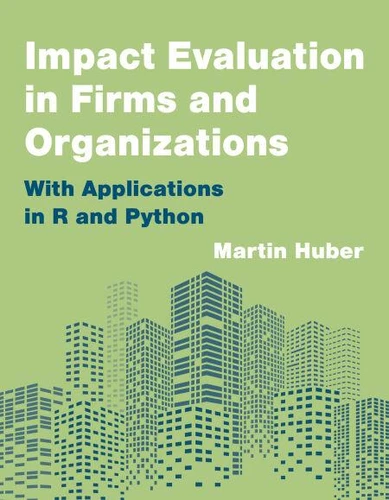
Impact Evaluation in Firms and Organizations. With Applications in R and Python
Par :Formats :
Disponible dans votre compte client Decitre ou Furet du Nord dès validation de votre commande. Le format ePub protégé est :
- Compatible avec une lecture sur My Vivlio (smartphone, tablette, ordinateur)
- Compatible avec une lecture sur liseuses Vivlio
- Pour les liseuses autres que Vivlio, vous devez utiliser le logiciel Adobe Digital Edition. Non compatible avec la lecture sur les liseuses Kindle, Remarkable et Sony
- Non compatible avec un achat hors France métropolitaine
 , qui est-ce ?
Notre partenaire de plateforme de lecture numérique où vous retrouverez l'ensemble de vos ebooks gratuitement
Pour en savoir plus sur nos ebooks, consultez notre aide en ligne ici
C'est si simple ! Lisez votre ebook avec l'app Vivlio sur votre tablette, mobile ou ordinateur :

- Nombre de pages160
- FormatePub
- ISBN978-0-262-38390-5
- EAN9780262383905
- Date de parution05/08/2025
- Protection num.Adobe DRM
- Taille5 Mo
- Infos supplémentairesepub
- ÉditeurThe MIT Press
Résumé
A comprehensive, nontechnical guide to the methods of data-based impact evaluation in companies and organizations, with coverage of machine learning techniques. In today's dynamic business climate, organizations face the constant challenge of making informed decisions about their interventions, from marketing campaigns and pricing strategies to employee training programs. In this practical textbook, Martin Huber provides a concise but comprehensive guide to quantitatively assessing the impact of such efforts, enabling decision-makers to make evidence-based choices.
The book introduces fundamental concepts, emphasizing the importance of causal analysis in understanding the true effects of interventions, before detailing a wide range of quantitative methods, including experimental and nonexperimental approaches. Huber then explores the integration of machine learning techniques for impact evaluation in the context of big data, sharing cutting-edge tools for data analysis.
Centering real-world, global applications, this accessible text is an invaluable resource for anyone seeking to enhance their decision-making processes through data-driven insights. Highlights the relevance of AI and equips readers to leverage advanced analytical techniques in the era of digital transformation Is ideal for introductory courses on impact evaluation or causal analysis Covers A/B testing, selection-on-observables, instrumental variables, regression discontinuity designs, and difference-in-differences Features extensive examples and demonstrations in R and Python Suits a wide audience, including business professionals and students with limited statistical expertise
The book introduces fundamental concepts, emphasizing the importance of causal analysis in understanding the true effects of interventions, before detailing a wide range of quantitative methods, including experimental and nonexperimental approaches. Huber then explores the integration of machine learning techniques for impact evaluation in the context of big data, sharing cutting-edge tools for data analysis.
Centering real-world, global applications, this accessible text is an invaluable resource for anyone seeking to enhance their decision-making processes through data-driven insights. Highlights the relevance of AI and equips readers to leverage advanced analytical techniques in the era of digital transformation Is ideal for introductory courses on impact evaluation or causal analysis Covers A/B testing, selection-on-observables, instrumental variables, regression discontinuity designs, and difference-in-differences Features extensive examples and demonstrations in R and Python Suits a wide audience, including business professionals and students with limited statistical expertise