SOLDES
Jusqu'à -70% sur une sélection d'articles*

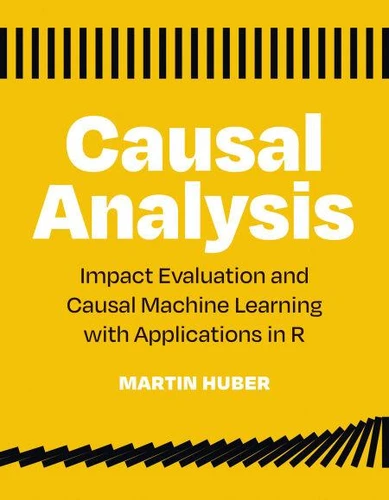
Causal Analysis. Impact Evaluation and Causal Machine Learning with Applications in R
Par :Formats :
Disponible dans votre compte client Decitre ou Furet du Nord dès validation de votre commande. Le format ePub protégé est :
- Compatible avec une lecture sur My Vivlio (smartphone, tablette, ordinateur)
- Compatible avec une lecture sur liseuses Vivlio
- Pour les liseuses autres que Vivlio, vous devez utiliser le logiciel Adobe Digital Edition. Non compatible avec la lecture sur les liseuses Kindle, Remarkable et Sony
- Non compatible avec un achat hors France métropolitaine
 , qui est-ce ?
Notre partenaire de plateforme de lecture numérique où vous retrouverez l'ensemble de vos ebooks gratuitement
Pour en savoir plus sur nos ebooks, consultez notre aide en ligne ici
C'est si simple ! Lisez votre ebook avec l'app Vivlio sur votre tablette, mobile ou ordinateur :

- Nombre de pages336
- FormatePub
- ISBN978-0-262-37492-7
- EAN9780262374927
- Date de parution01/08/2023
- Protection num.Adobe DRM
- Taille10 Mo
- Infos supplémentairesepub
- ÉditeurThe MIT Press
Résumé
A comprehensive and cutting-edge introduction to quantitative methods of causal analysis, including new trends in machine learning. Reasoning about cause and effect-the consequence of doing one thing versus another-is an integral part of our lives as human beings. In an increasingly digital and data-driven economy, the importance of sophisticated causal analysis only deepens. Presenting the most important quantitative methods for evaluating causal effects, this textbook provides graduate students and researchers with a clear and comprehensive introduction to the causal analysis of empirical data.
Martin Huber's accessible approach highlights the intuition and motivation behind various methods while also providing formal discussions of key concepts using statistical notation. Causal Analysis covers several methodological developments not covered in other texts, including new trends in machine learning, the evaluation of interaction or interference effects, and recent research designs such as bunching or kink designs.
Most complete and cutting-edge introduction to causal analysis, including causal machine learning Clean presentation of rigorous material avoids extraneous detail and emphasizes conceptual analogies over statistical notation Supplies a range of applications and practical examples using R
Martin Huber's accessible approach highlights the intuition and motivation behind various methods while also providing formal discussions of key concepts using statistical notation. Causal Analysis covers several methodological developments not covered in other texts, including new trends in machine learning, the evaluation of interaction or interference effects, and recent research designs such as bunching or kink designs.
Most complete and cutting-edge introduction to causal analysis, including causal machine learning Clean presentation of rigorous material avoids extraneous detail and emphasizes conceptual analogies over statistical notation Supplies a range of applications and practical examples using R