Hans Werner teaches Canadian History and Mennonite Studies at the University of Winnipeg. His current research includes German and Mennonite migration in the Soviet Union and early Mennonite settlements in western Canada. He is the author of Living Between Worlds: A History of Winkler and The Constructed Mennonite: History, Memory, and the Second World War.
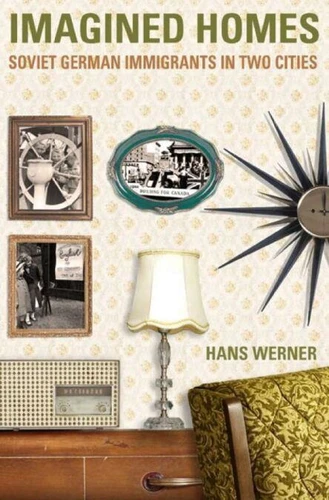
Imagined Homes. Soviet German Immigrants in Two Cities
Par :Formats :
Disponible dans votre compte client Decitre ou Furet du Nord dès validation de votre commande. Le format ePub est :
- Compatible avec une lecture sur My Vivlio (smartphone, tablette, ordinateur)
- Compatible avec une lecture sur liseuses Vivlio
- Pour les liseuses autres que Vivlio, vous devez utiliser le logiciel Adobe Digital Edition. Non compatible avec la lecture sur les liseuses Kindle, Remarkable et Sony
 , qui est-ce ?
Notre partenaire de plateforme de lecture numérique où vous retrouverez l'ensemble de vos ebooks gratuitement
Pour en savoir plus sur nos ebooks, consultez notre aide en ligne ici
C'est si simple ! Lisez votre ebook avec l'app Vivlio sur votre tablette, mobile ou ordinateur :

- Nombre de pages304
- FormatePub
- ISBN978-0-88755-979-2
- EAN9780887559792
- Date de parution30/11/2007
- Protection num.Digital Watermarking
- Taille6 Mo
- Infos supplémentairesepub
- ÉditeurUniversity of Manitoba Press
Résumé
Imagined Homes: Soviet German Immigrants in Two Cities is a study of the social and cultural integration of two migrations of German speakers from Eastern Europe and the Soviet Union to Winnipeg, Canada in the late 1940s, and Bielefeld, Germany in the 1970s. Employing a cross-national comparative framework, Hans Werner reveals that the imagined trajectory of immigrant lives influenced the process of integration into a new urban environment.
Winnipeg's migrants chose a receiving society where they knew they would again be a minority group in a foreign country, while Bielefeld's newcomers believed they were "going home" and were unprepared for the conflict between their imagined homeland and the realities of post-war Germany. Werner also shows that differences in the way the two receiving societies perceived immigrants, and the degree to which secularization and the sexual and media revolutions influenced these perceptions in the two cities, were crucially important in the immigrant experience.
Winnipeg's migrants chose a receiving society where they knew they would again be a minority group in a foreign country, while Bielefeld's newcomers believed they were "going home" and were unprepared for the conflict between their imagined homeland and the realities of post-war Germany. Werner also shows that differences in the way the two receiving societies perceived immigrants, and the degree to which secularization and the sexual and media revolutions influenced these perceptions in the two cities, were crucially important in the immigrant experience.