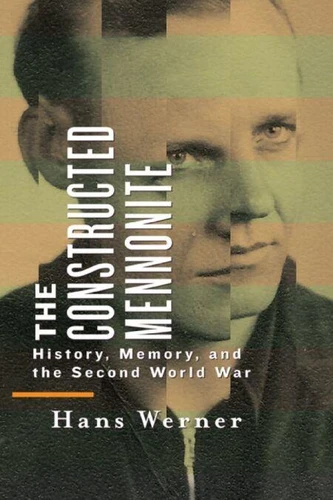
Hans Werner teaches Canadian History and Mennonite Studies at the University of Winnipeg. His current research includes German and Mennonite migration in the Soviet Union and early Mennonite settlements in western Canada. He is the author of Living Between Worlds: A History of Winkler and The Constructed Mennonite: History, Memory, and the Second World War.
The Constructed Mennonite. History, Memory, and the Second World War
Par :Formats :
Disponible dans votre compte client Decitre ou Furet du Nord dès validation de votre commande. Le format ePub est :
- Compatible avec une lecture sur My Vivlio (smartphone, tablette, ordinateur)
- Compatible avec une lecture sur liseuses Vivlio
- Pour les liseuses autres que Vivlio, vous devez utiliser le logiciel Adobe Digital Edition. Non compatible avec la lecture sur les liseuses Kindle, Remarkable et Sony
 , qui est-ce ?
Notre partenaire de plateforme de lecture numérique où vous retrouverez l'ensemble de vos ebooks gratuitement
Pour en savoir plus sur nos ebooks, consultez notre aide en ligne ici
C'est si simple ! Lisez votre ebook avec l'app Vivlio sur votre tablette, mobile ou ordinateur :

- Nombre de pages200
- FormatePub
- ISBN978-0-88755-438-4
- EAN9780887554384
- Date de parution15/05/2013
- Protection num.Digital Watermarking
- Taille6 Mo
- Infos supplémentairesepub
- ÉditeurUniversity of Manitoba Press
Résumé
John Werner was a storyteller. A Mennonite immigrant in southern Manitoba, he captivated his audiences with tales of adventure and perseverance. With every telling he constructed and reconstructed the memories of his life. John Werner was a survivor. Born in the Soviet Union just after the Bolshevik Revolution, he was named Hans and grew up in a German-speaking Mennonite community in Siberia. As a young man in Stalinist Russia, he became Ivan and fought as a Red Army soldier in the Second World War.
Captured by Germans, he was resettled in occupied Poland where he became Johann, was naturalized and drafted into Hitler's German army where he served until captured and placed in an American POW camp. He was eventually released and then immigrated to Canada where he became John. The Constructed Mennonite is a unique account of a life shaped by Stalinism, Nazism, migration, famine, and war. It investigates the tenuous spaces where individual experiences inform and become public history; it studies the ways in which memory shapes identity, and reveals how context and audience shape autobiographical narratives.
Captured by Germans, he was resettled in occupied Poland where he became Johann, was naturalized and drafted into Hitler's German army where he served until captured and placed in an American POW camp. He was eventually released and then immigrated to Canada where he became John. The Constructed Mennonite is a unique account of a life shaped by Stalinism, Nazism, migration, famine, and war. It investigates the tenuous spaces where individual experiences inform and become public history; it studies the ways in which memory shapes identity, and reveals how context and audience shape autobiographical narratives.