Directeur des métiers et technologies avancés du groupe Air Liquide, en charge notamment d'ouvrir les nouveaux marchés du groupe portés par la transition écologique, Pierre-Étienne Franc est très impliqué dans la promotion et le développement de l'énergie hydrogène.
À ce titre, il préside depuis 2011 le groupement européen représentant la filière (NEW IG) et le comité directeur de la plateforme technologique conjointe européenne de la filière hydrogène et de la pile à combustible (FCH JU), structure copilotée avec la Commission européenne, qui finance son développement en Europe.
Ce journaliste indépendant, travaillant pour la presse nationale et régionale, a réalisé plusieurs tours de l'Hexagone, à l'affût des petits et grands événements qui font l'actualité de nos régions.
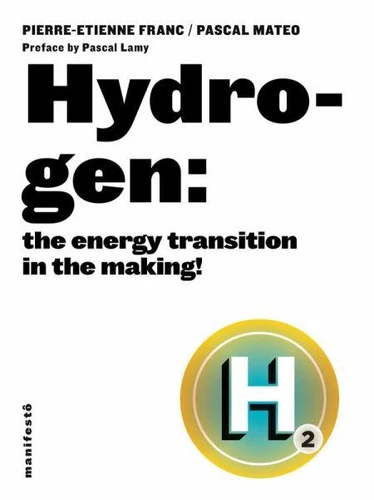
Hydrogen: the energy transition in the making!
Par : , ,Formats :
Disponible dans votre compte client Decitre ou Furet du Nord dès validation de votre commande. Le format ePub protégé est :
- Compatible avec une lecture sur My Vivlio (smartphone, tablette, ordinateur)
- Compatible avec une lecture sur liseuses Vivlio
- Pour les liseuses autres que Vivlio, vous devez utiliser le logiciel Adobe Digital Edition. Non compatible avec la lecture sur les liseuses Kindle, Remarkable et Sony
- Non compatible avec un achat hors France métropolitaine
 , qui est-ce ?
Notre partenaire de plateforme de lecture numérique où vous retrouverez l'ensemble de vos ebooks gratuitement
Pour en savoir plus sur nos ebooks, consultez notre aide en ligne ici
C'est si simple ! Lisez votre ebook avec l'app Vivlio sur votre tablette, mobile ou ordinateur :

- Nombre de pages157
- FormatePub
- ISBN978-2-07-265088-8
- EAN9782072650888
- Date de parution18/11/2015
- Protection num.Adobe DRM
- Taille502 Ko
- Infos supplémentairesepub
- ÉditeurAlternatives éditions
Résumé
Reducing greenhouse gas emissions and addressing the gradual disappearance of fossil fuels figure among the challenges the planet must face in the years to come. Hydrogen can and indeed must play an important role in the energy transition. Since the technologies that allow for the safe production and use of hydrogen are now mature, this carbon-free molecule can enable the shift to a "clean" world.
Hydrogen has the capacity to store primary energy, particularly renewable energies.
Combined with a fuel cell battery, it can also make this energy available in the form of electricity in a large number of applications, starting with those that pertain to mobility. But while the technical difficulties are in the process of being resolved today, responses to the economic and financial challenges have yet to be found: going forward, it will be necessary to structure large-scale industrial and commercial deployments.
And doing so will require new forms of global cooperation between the private sector and public policymakers at the international level. In a word, launching the energy transition requires a paradigm shift.
Combined with a fuel cell battery, it can also make this energy available in the form of electricity in a large number of applications, starting with those that pertain to mobility. But while the technical difficulties are in the process of being resolved today, responses to the economic and financial challenges have yet to be found: going forward, it will be necessary to structure large-scale industrial and commercial deployments.
And doing so will require new forms of global cooperation between the private sector and public policymakers at the international level. In a word, launching the energy transition requires a paradigm shift.