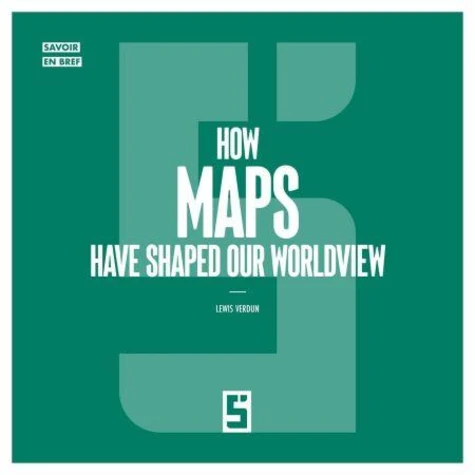
Dive behind the scenes of cartography and discover how the maps we rely on every day shape our perception of the world. This mini book from the SAVOIR EN BREF collection (Publisher : Five Minutes) traces the history of representations from Babylonian clay tablets to digital projections. It reveals how colonial borders and the Mercator projection distorted our view and served strategies of domination.
At the same time, it highlights contemporary movements fighting for fairer maps, such as the Correct The Map campaign, Indigenous counter mapping, educational initiatives and innovations powered by artificial intelligence. Through concrete examples - community mapping in the Amazon, digital twins in India, participatory mapping for environmental justice - the book shows that maps are not neutral tools but instruments of power and social transformation.
They can reinforce invisibility or, on the contrary, celebrate diversity and equity. This concise, well documented work provides keys for reading maps critically and understanding the ethical and political stakes of geovisualisation. It urges readers to explore multiple projections and support inclusive representations. Read it to reinvent your vision of the world and to play your part in building a more equitable cartographic future.
Dive behind the scenes of cartography and discover how the maps we rely on every day shape our perception of the world. This mini book from the SAVOIR EN BREF collection (Publisher : Five Minutes) traces the history of representations from Babylonian clay tablets to digital projections. It reveals how colonial borders and the Mercator projection distorted our view and served strategies of domination.
At the same time, it highlights contemporary movements fighting for fairer maps, such as the Correct The Map campaign, Indigenous counter mapping, educational initiatives and innovations powered by artificial intelligence. Through concrete examples - community mapping in the Amazon, digital twins in India, participatory mapping for environmental justice - the book shows that maps are not neutral tools but instruments of power and social transformation.
They can reinforce invisibility or, on the contrary, celebrate diversity and equity. This concise, well documented work provides keys for reading maps critically and understanding the ethical and political stakes of geovisualisation. It urges readers to explore multiple projections and support inclusive representations. Read it to reinvent your vision of the world and to play your part in building a more equitable cartographic future.