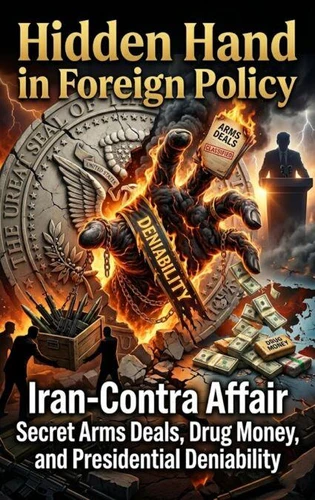
Hidden Hand in Foreign Policy. Iran-Contra Affair Secret Arms Deals, Drug Money, and Presidential Deniability
Par :Formats :
Disponible dans votre compte client Decitre ou Furet du Nord dès validation de votre commande. Le format ePub est :
- Compatible avec une lecture sur My Vivlio (smartphone, tablette, ordinateur)
- Compatible avec une lecture sur liseuses Vivlio
- Pour les liseuses autres que Vivlio, vous devez utiliser le logiciel Adobe Digital Edition. Non compatible avec la lecture sur les liseuses Kindle, Remarkable et Sony
 , qui est-ce ?
Notre partenaire de plateforme de lecture numérique où vous retrouverez l'ensemble de vos ebooks gratuitement
Pour en savoir plus sur nos ebooks, consultez notre aide en ligne ici
C'est si simple ! Lisez votre ebook avec l'app Vivlio sur votre tablette, mobile ou ordinateur :

- Nombre de pages202
- FormatePub
- ISBN978-3-565-45572-0
- EAN9783565455720
- Date de parution23/05/2026
- Protection num.pas de protection
- Taille2 Mo
- Infos supplémentairesepub
- ÉditeurEmphaloz Publishing House
Résumé
This book examines how a hidden hand in foreign policy emerges when covert operators manipulate arms transfers, financial flows, and deniability structures, as exemplified by the Iran-Contra affair's secret transactions and presidential insulation tactics. By treating the affair not as an isolated scandal but as a disruption to standard foreign policy execution, the work investigates the concealed mechanics of information flow, decision-making hierarchies, and incentive structures that govern clandestine operations and backroom negotiations.
The analysis reveals how exposure of such hidden systems forces reassessments of oversight mechanisms and shifts how states balance operational flexibility against accountability in international engagements. The first mechanism examined is the arms transfer and financing network, which moved weapons from the United States to Iran through intermediaries while diverting proceeds to support Nicaraguan contras.
This system relied on offshore enterprises and layered transactions that obscured the ultimate destination of funds, demonstrating how complex financial routing can evade congressional scrutiny. The second mechanism concerns the deniability architecture built around intermediaries and document control, where figures such as Oliver North and John Poindexter acted as buffers to insulate senior leadership from direct knowledge.
This hierarchical delegation created intentional gaps in the decision-making chain, allowing senior officials to claim ignorance while subordinates executed covert directives. The third mechanism involves the handling of allegations surrounding drug money linkages, where investigations faced difficulty tracing financial flows because of the clandestine structure of the operations and limited oversight focus on certain trails.
The analysis reveals how exposure of such hidden systems forces reassessments of oversight mechanisms and shifts how states balance operational flexibility against accountability in international engagements. The first mechanism examined is the arms transfer and financing network, which moved weapons from the United States to Iran through intermediaries while diverting proceeds to support Nicaraguan contras.
This system relied on offshore enterprises and layered transactions that obscured the ultimate destination of funds, demonstrating how complex financial routing can evade congressional scrutiny. The second mechanism concerns the deniability architecture built around intermediaries and document control, where figures such as Oliver North and John Poindexter acted as buffers to insulate senior leadership from direct knowledge.
This hierarchical delegation created intentional gaps in the decision-making chain, allowing senior officials to claim ignorance while subordinates executed covert directives. The third mechanism involves the handling of allegations surrounding drug money linkages, where investigations faced difficulty tracing financial flows because of the clandestine structure of the operations and limited oversight focus on certain trails.