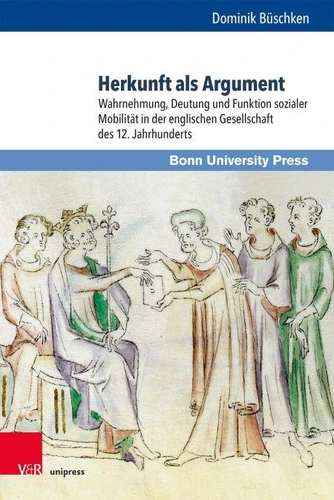
Herkunft als Argument. Wahrnehmung, Deutung und Funktion sozialer Mobilität in der englischen Gesellschaft des 12. Jahrhunderts
Par :Formats :
Disponible dans votre compte client Decitre ou Furet du Nord dès validation de votre commande. Le format PDF est :
- Compatible avec une lecture sur My Vivlio (smartphone, tablette, ordinateur)
- Compatible avec une lecture sur liseuses Vivlio
- Pour les liseuses autres que Vivlio, vous devez utiliser le logiciel Adobe Digital Edition. Non compatible avec la lecture sur les liseuses Kindle, Remarkable et Sony
 , qui est-ce ?
Notre partenaire de plateforme de lecture numérique où vous retrouverez l'ensemble de vos ebooks gratuitement
Pour en savoir plus sur nos ebooks, consultez notre aide en ligne ici
C'est si simple ! Lisez votre ebook avec l'app Vivlio sur votre tablette, mobile ou ordinateur :

- Nombre de pages477
- FormatPDF
- ISBN978-3-8470-1230-6
- EAN9783847012306
- Date de parution14/12/2020
- Protection num.pas de protection
- Taille4 Mo
- Infos supplémentairespdf
- ÉditeurV&R Unipress
Résumé
In den schriftlichen Quellen des 12. Jahrhunderts wurde sozialer Aufstieg als Argument in den Debatten um soziale Gerechtigkeit, religiöse Normen und Privilegien genutzt. In diesem Band untersucht Dominik Büschken anhand erzählender Quellen mittelalterliche Wahrnehmungsmuster sozialer Mobilität, den Einfluss mittelalterlicher Deutungen auf soziale Aufstiegsmöglichkeiten und die Funktion sozialer Mobilität für das Gesellschaftssystem.
Besonders die Funktion stand im Widerspruch zu vormodernen Erklärmustern sozialer Wirklichkeit und lag darüber hinaus auch außerhalb des Wahrnehmungshorizontes zeitgenössischer Verfasser. Soziale Herkunft und sozialer Aufstieg waren in den Debatten um Gerechtigkeit und Gottgefälligkeit stets ein Argument für die gültigen Sozialvorstellungen der Verfasser und damit gegen soziale Dynamik und soziale Aufsteiger. In the present study Dominik Büschken uses narrative sources to examine medieval patterns of perception of social mobility, the influence of medieval interpretations on social advancement opportunities, and analyses the function that social mobility could assume for the system of society.
Especially the function was not only in contradiction to pre-modern explanatory patterns of social reality, but also lay outside the perspective of contemporary writers. In the debates about social justice and godliness, social origin and social advancement were always an argument for the valid social conceptions of the authors and thus against social mobility and social advancement.
Besonders die Funktion stand im Widerspruch zu vormodernen Erklärmustern sozialer Wirklichkeit und lag darüber hinaus auch außerhalb des Wahrnehmungshorizontes zeitgenössischer Verfasser. Soziale Herkunft und sozialer Aufstieg waren in den Debatten um Gerechtigkeit und Gottgefälligkeit stets ein Argument für die gültigen Sozialvorstellungen der Verfasser und damit gegen soziale Dynamik und soziale Aufsteiger. In the present study Dominik Büschken uses narrative sources to examine medieval patterns of perception of social mobility, the influence of medieval interpretations on social advancement opportunities, and analyses the function that social mobility could assume for the system of society.
Especially the function was not only in contradiction to pre-modern explanatory patterns of social reality, but also lay outside the perspective of contemporary writers. In the debates about social justice and godliness, social origin and social advancement were always an argument for the valid social conceptions of the authors and thus against social mobility and social advancement.