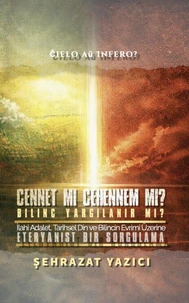
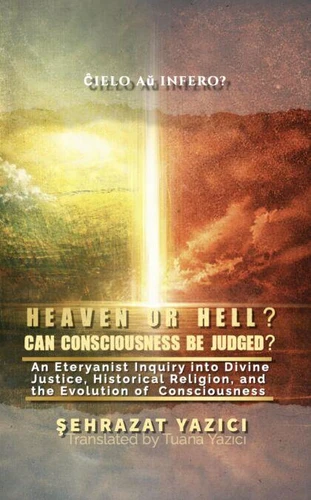
HEAVEN OR HELL?CAN CONSCIOUSNESS BE JUDGED? Humanity has continued to reflect on this question since its earliest attempts to understand existence. This dual structure, constructed around the idea of what comes after death, is not merely a matter of belief; it also lies at the very center of our understanding of justice, consciousness, and truth. Yet this question may not be as innocent as it appears.
For the way a question is framed determines which answers can become possible. Rather than directly answering the concepts of heaven and hell, this book-within the framework of Eteryanist philosophy-opens to inquiry the very intellectual ground upon which these concepts are built. Divine justice, consciousness, existence, and death are reconsidered beyond conventional frameworks. Eteryanism does not propose a system of belief or a new religion; it offers an open philosophical framework that invites a deeper reflection on existence.
Perhaps the issue is not a place to which one goes. Perhaps the issue is far deeper than it is assumed to be. And perhaps the real question has not yet been properly asked. This book confronts you not only with a new perspective, but with a deeper understanding of existence itself.
HEAVEN OR HELL?CAN CONSCIOUSNESS BE JUDGED? Humanity has continued to reflect on this question since its earliest attempts to understand existence. This dual structure, constructed around the idea of what comes after death, is not merely a matter of belief; it also lies at the very center of our understanding of justice, consciousness, and truth. Yet this question may not be as innocent as it appears.
For the way a question is framed determines which answers can become possible. Rather than directly answering the concepts of heaven and hell, this book-within the framework of Eteryanist philosophy-opens to inquiry the very intellectual ground upon which these concepts are built. Divine justice, consciousness, existence, and death are reconsidered beyond conventional frameworks. Eteryanism does not propose a system of belief or a new religion; it offers an open philosophical framework that invites a deeper reflection on existence.
Perhaps the issue is not a place to which one goes. Perhaps the issue is far deeper than it is assumed to be. And perhaps the real question has not yet been properly asked. This book confronts you not only with a new perspective, but with a deeper understanding of existence itself.

 , qui est-ce ?