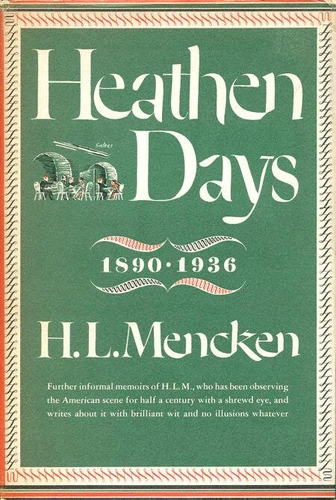
Heathen Days
Par :Formats :
Disponible dans votre compte client Decitre ou Furet du Nord dès validation de votre commande. Le format ePub protégé est :
- Compatible avec une lecture sur My Vivlio (smartphone, tablette, ordinateur)
- Compatible avec une lecture sur liseuses Vivlio
- Pour les liseuses autres que Vivlio, vous devez utiliser le logiciel Adobe Digital Edition. Non compatible avec la lecture sur les liseuses Kindle, Remarkable et Sony
- Non compatible avec un achat hors France métropolitaine
 , qui est-ce ?
Notre partenaire de plateforme de lecture numérique où vous retrouverez l'ensemble de vos ebooks gratuitement
Pour en savoir plus sur nos ebooks, consultez notre aide en ligne ici
C'est si simple ! Lisez votre ebook avec l'app Vivlio sur votre tablette, mobile ou ordinateur :

- Nombre de pages320
- FormatePub
- ISBN978-0-307-83088-3
- EAN9780307830883
- Date de parution20/03/2013
- Protection num.Adobe DRM
- Taille2 Mo
- Infos supplémentairesepub
- ÉditeurKnopf
Résumé
In the third volume of his autobiography, H. L. Mencken looks back on his life and declares it "very busy and excessively pleasant." He imparts the impressive education he received from Hoggie Unglebower, the best dog trainer in Christendom, and the survival techniques he employed at Baltimore Polytechnic, where he learned to protect his fingers from power tools and his character from the influence of algebra.
Mencken also describes the club boxing matches he attended, watching as the combatants in this gentleman's sport genteelly broke both bones and the law. And he recounts his voyage across the Atlantic that he, unlike Columbus, paid for himself. In Naples, he admired the garbage that seemed to have accumulated since Roman times. In Tunis, he searched for the ruins of Carthage. In the Holy Land, he looked for the ruins of Gomorrah, the Hollywood of antiquity, in hopes of finding evidence that the city's unparalleled reputation for wickedness was simply exaggerated.
Mencken also describes the club boxing matches he attended, watching as the combatants in this gentleman's sport genteelly broke both bones and the law. And he recounts his voyage across the Atlantic that he, unlike Columbus, paid for himself. In Naples, he admired the garbage that seemed to have accumulated since Roman times. In Tunis, he searched for the ruins of Carthage. In the Holy Land, he looked for the ruins of Gomorrah, the Hollywood of antiquity, in hopes of finding evidence that the city's unparalleled reputation for wickedness was simply exaggerated.
A propos de H.L. Mencken
0,99 €

0,99 €
Minority Report
E-book
8,02 €
Notes on Democracy
E-book
5,72 €
Happy Days
E-book
17,19 €
Newspaper Days
E-book
20,64 €
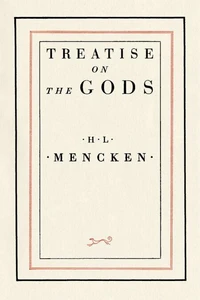
Treatise on the Gods
E-book
5,72 €
5,72 €
20,64 €
20,64 €
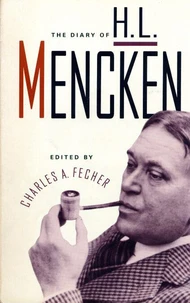
Diary of H. L. Mencken
E-book
14,91 €
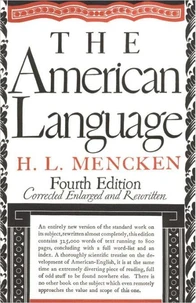
American Language
E-book
20,64 €
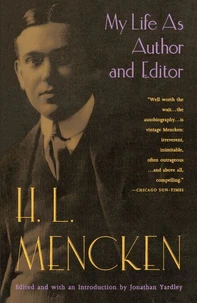
11,46 €