American Language
Par :Formats :
Disponible dans votre compte client Decitre ou Furet du Nord dès validation de votre commande. Le format ePub protégé est :
- Compatible avec une lecture sur My Vivlio (smartphone, tablette, ordinateur)
- Compatible avec une lecture sur liseuses Vivlio
- Pour les liseuses autres que Vivlio, vous devez utiliser le logiciel Adobe Digital Edition. Non compatible avec la lecture sur les liseuses Kindle, Remarkable et Sony
- Non compatible avec un achat hors France métropolitaine
 , qui est-ce ?
Notre partenaire de plateforme de lecture numérique où vous retrouverez l'ensemble de vos ebooks gratuitement
Pour en savoir plus sur nos ebooks, consultez notre aide en ligne ici
C'est si simple ! Lisez votre ebook avec l'app Vivlio sur votre tablette, mobile ou ordinateur :

- Nombre de pages816
- FormatePub
- ISBN978-0-307-80879-0
- EAN9780307808790
- Date de parution04/01/2012
- Protection num.Adobe DRM
- Taille3 Mo
- Infos supplémentairesepub
- ÉditeurKnopf
Résumé
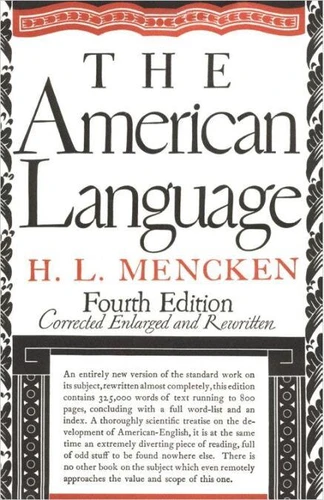
The American Language, first published in 1919, is H. L. Mencken's book about the English language as spoken in the United States. Mencken was inspired by "the argot of the colored waiters" in Washington, as well as one of his favorite authors, Mark Twain, and his experiences on the streets of Baltimore. In 1902, Mencken remarked on the "queer words which go into the making of 'United States.'" The book was preceded by several columns in The Evening Sun. Mencken eventually asked "Why doesn't some painstaking pundit attempt a grammar of the American language...
English, that is, as spoken by the great masses of the plain people of this fair land?" It would appear that he answered his own question. In the tradition of Noah Webster, who wrote the first American dictionary, Mencken wanted to defend "Americanisms" against a steady stream of English critics, who usually isolated Americanisms as borderline barbarous perversions of the mother tongue. Mencken assaulted the prescriptive grammar of these critics and American "schoolmarms", arguing, like Samuel Johnson in the preface to his dictionary, that language evolves independently of textbooks.
The book discusses the beginnings of "American" variations from "English", the spread of these variations, American names and slang over the course of its 374 pages. According to Mencken, American English was more colorful, vivid, and creative than its British counterpart.
English, that is, as spoken by the great masses of the plain people of this fair land?" It would appear that he answered his own question. In the tradition of Noah Webster, who wrote the first American dictionary, Mencken wanted to defend "Americanisms" against a steady stream of English critics, who usually isolated Americanisms as borderline barbarous perversions of the mother tongue. Mencken assaulted the prescriptive grammar of these critics and American "schoolmarms", arguing, like Samuel Johnson in the preface to his dictionary, that language evolves independently of textbooks.
The book discusses the beginnings of "American" variations from "English", the spread of these variations, American names and slang over the course of its 374 pages. According to Mencken, American English was more colorful, vivid, and creative than its British counterpart.
A propos de H.L. Mencken
0,99 €
0,99 €
Minority Report
E-book
8,02 €
Notes on Democracy
E-book
5,72 €
Happy Days
E-book
17,19 €
Heathen Days
E-book
20,64 €
Newspaper Days
E-book
20,64 €
Treatise on the Gods
E-book
5,72 €
5,72 €
20,64 €
20,64 €
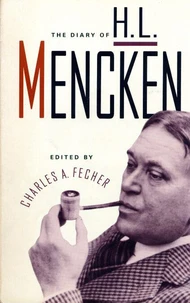
Diary of H. L. Mencken
E-book
14,91 €
11,46 €