Hannah Arendt (1906-1975) est considérée comme l'une des plus grandes philosophes du XXe siècle. On compte parmi ses grands textes Les Origines du totalitarisme, L'Humaine Condition et, plus récemment, Ecrits juifs.
SOLDES
Jusqu'à -70% sur une sélection d'articles*
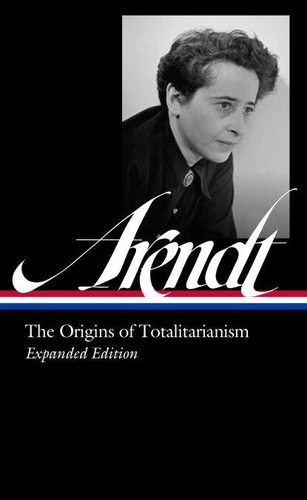
Hannah Arendt: The Origins of Totalitarianism Expanded Edition (LOA #389)
Par : , ,Formats :
Disponible dans votre compte client Decitre ou Furet du Nord dès validation de votre commande. Le format ePub protégé est :
- Compatible avec une lecture sur My Vivlio (smartphone, tablette, ordinateur)
- Compatible avec une lecture sur liseuses Vivlio
- Pour les liseuses autres que Vivlio, vous devez utiliser le logiciel Adobe Digital Edition. Non compatible avec la lecture sur les liseuses Kindle, Remarkable et Sony
- Non compatible avec un achat hors France métropolitaine
 , qui est-ce ?
Notre partenaire de plateforme de lecture numérique où vous retrouverez l'ensemble de vos ebooks gratuitement
Pour en savoir plus sur nos ebooks, consultez notre aide en ligne ici
C'est si simple ! Lisez votre ebook avec l'app Vivlio sur votre tablette, mobile ou ordinateur :

- Nombre de pages900
- FormatePub
- ISBN978-1-59853-807-6
- EAN9781598538076
- Date de parution22/04/2025
- Protection num.Adobe DRM
- Taille1 Mo
- Infos supplémentairesepub
- ÉditeurLibrary of America
Résumé
A deluxe expanded edition of the masterpiece of political philosophy that transformed how the world thinks about fascism and authoritarianismIncludes two fascinating chapters that were later cut and are available in no other editionIn 1951, a monumental book by a relatively unknown German-Jewish émigré addressed the terrifying new mode of political organization underlying the twin horrors of Stalinism and Nazism.
Herself a refugee from Nazi persecution, Hannah Arendt sought, from her exile in New York City, to answer the unfathomable questions raised by the Soviet gulag and the Holocaust: How could there be such barbarism in the midst of civilization? How had governments exerted such absolute control over citizens, terrorizing them and enlisting them to commit atrocities on their behalf?Arendt's historical and cultural analyses extend to a thorough examination of nineteenth-century antisemitism in Europe, including a trenchant account of the Dreyfus Affair in France and brilliant insights into imperialism, racism, and their role in totalitarianism's rise in the 1920s and 1930s.
Arendt contends that totalitarianism, as a political system, is now embedded in contemporary life and is, as she would later remark, "the central event of our world."Her clear-eyed warning that totalitarianism is not merely a historical episode but is rather a permanent feature of modernity and beyond-a danger never to be fully eradicated, and a continual temptation for anti-democratic demagogues-makes Arendt, a half-century after her death, a preeminent thinker and political philosopher for the twenty-first century.
The Library of America edition of this indispensable and influential work, based on the final version she revised in her lifetime, also restores to print Arendt's "Concluding Remarks" to the 1951 first American edition and a chapter on the Soviet suppression of the Hungarian revolt of 1956, both of which were cut from later editions. The first annotated edition of Origins, the volume contains concise and thorough glosses on Arendt's many historical and cultural references, and its Chronology provides a detailed portrait of her remarkable life.
Herself a refugee from Nazi persecution, Hannah Arendt sought, from her exile in New York City, to answer the unfathomable questions raised by the Soviet gulag and the Holocaust: How could there be such barbarism in the midst of civilization? How had governments exerted such absolute control over citizens, terrorizing them and enlisting them to commit atrocities on their behalf?Arendt's historical and cultural analyses extend to a thorough examination of nineteenth-century antisemitism in Europe, including a trenchant account of the Dreyfus Affair in France and brilliant insights into imperialism, racism, and their role in totalitarianism's rise in the 1920s and 1930s.
Arendt contends that totalitarianism, as a political system, is now embedded in contemporary life and is, as she would later remark, "the central event of our world."Her clear-eyed warning that totalitarianism is not merely a historical episode but is rather a permanent feature of modernity and beyond-a danger never to be fully eradicated, and a continual temptation for anti-democratic demagogues-makes Arendt, a half-century after her death, a preeminent thinker and political philosopher for the twenty-first century.
The Library of America edition of this indispensable and influential work, based on the final version she revised in her lifetime, also restores to print Arendt's "Concluding Remarks" to the 1951 first American edition and a chapter on the Soviet suppression of the Hungarian revolt of 1956, both of which were cut from later editions. The first annotated edition of Origins, the volume contains concise and thorough glosses on Arendt's many historical and cultural references, and its Chronology provides a detailed portrait of her remarkable life.
A propos de Hannah Arendt

19,99 €

5,99 €
12,60 €
4/5
8,00 €


8,50 €

8,90 €