OFFRE LISEUSES
Une liseuse achetée = une housse offerte* jusqu'au 21 juin

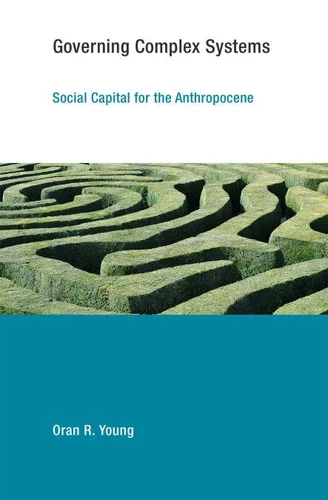
Governing Complex Systems. Social Capital for the Anthropocene
Par :Formats :
Disponible dans votre compte client Decitre ou Furet du Nord dès validation de votre commande. Le format ePub protégé est :
- Compatible avec une lecture sur My Vivlio (smartphone, tablette, ordinateur)
- Compatible avec une lecture sur liseuses Vivlio
- Pour les liseuses autres que Vivlio, vous devez utiliser le logiciel Adobe Digital Edition. Non compatible avec la lecture sur les liseuses Kindle, Remarkable et Sony
- Non compatible avec un achat hors France métropolitaine
 , qui est-ce ?
Notre partenaire de plateforme de lecture numérique où vous retrouverez l'ensemble de vos ebooks gratuitement
Pour en savoir plus sur nos ebooks, consultez notre aide en ligne ici
C'est si simple ! Lisez votre ebook avec l'app Vivlio sur votre tablette, mobile ou ordinateur :

- Nombre de pages296
- FormatePub
- ISBN978-0-262-03584-2
- EAN9780262035842
- Date de parution24/02/2017
- Protection num.Adobe DRM
- Taille747 Ko
- Infos supplémentairesepub
- ÉditeurThe MIT Press
Résumé
An exploration of the need for innovative mechanisms of governance in an era when human actions are major drivers of environmental change. The onset of the Anthropocene, an era in which human actions have become major drivers of change on a planetary scale, has increased the complexity of socioecological systems. Complex systems pose novel challenges for governance because of their high levels of connectivity, nonlinear dynamics, directional patterns of change, and emergent properties.
Meeting these challenges will require the development of new intellectual capital. In this book, Oran Young argues that to achieve sustainable outcomes in a world of complex systems, we will need governance systems that are simultaneously durable enough to be effective in guiding behavior and agile enough to adapt to rapidly changing circumstances. While some insights from past research on governance remain valid in this setting, Young argues that we need new social capital to supplement mainstream regulatory approaches that feature rule making with an emphasis on compliance and enforcement.
He explores the uses of goal setting as a governance strategy, the idea of principled governance, and the role of what is often called good governance in meeting the challenges of the Anthropocene. Drawing on his long experience operating on the science/policy frontier, Young calls for more effective collaboration between analysts and practitioners in creating and implementing governance systems capable of producing sustainable outcomes in a world of complex systems.
Meeting these challenges will require the development of new intellectual capital. In this book, Oran Young argues that to achieve sustainable outcomes in a world of complex systems, we will need governance systems that are simultaneously durable enough to be effective in guiding behavior and agile enough to adapt to rapidly changing circumstances. While some insights from past research on governance remain valid in this setting, Young argues that we need new social capital to supplement mainstream regulatory approaches that feature rule making with an emphasis on compliance and enforcement.
He explores the uses of goal setting as a governance strategy, the idea of principled governance, and the role of what is often called good governance in meeting the challenges of the Anthropocene. Drawing on his long experience operating on the science/policy frontier, Young calls for more effective collaboration between analysts and practitioners in creating and implementing governance systems capable of producing sustainable outcomes in a world of complex systems.