SOLDES
Jusqu'à -70% sur une sélection d'articles*

Nouveauté
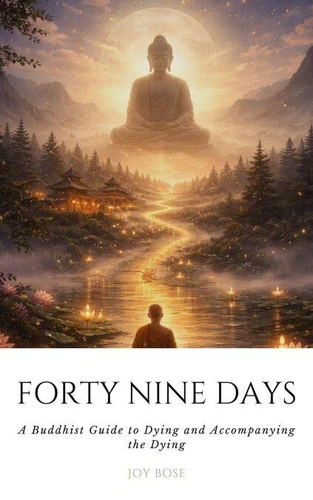
Forty Nine Days: A Buddhist Guide to Dying and Accompanying the Dying
Par :Formats :
Disponible dans votre compte client Decitre ou Furet du Nord dès validation de votre commande. Le format ePub protégé est :
- Compatible avec une lecture sur My Vivlio (smartphone, tablette, ordinateur)
- Compatible avec une lecture sur liseuses Vivlio
- Pour les liseuses autres que Vivlio, vous devez utiliser le logiciel Adobe Digital Edition. Non compatible avec la lecture sur les liseuses Kindle, Remarkable et Sony
- Non compatible avec un achat hors France métropolitaine
 , qui est-ce ?
Notre partenaire de plateforme de lecture numérique où vous retrouverez l'ensemble de vos ebooks gratuitement
Pour en savoir plus sur nos ebooks, consultez notre aide en ligne ici
C'est si simple ! Lisez votre ebook avec l'app Vivlio sur votre tablette, mobile ou ordinateur :

- FormatePub
- ISBN8235206038
- EAN9798235206038
- Date de parution05/06/2026
- Protection num.Adobe DRM
- Infos supplémentairesepub
- ÉditeurIoakim Ioakim
Résumé
Someone you love is dying. Or you have been given a diagnosis. Or you are sitting at a deathbed with no idea what to do, what to say, or whether any of it matters. Forty-Nine Days was written for that moment, and for the preparation that must begin long before the crisis arrives. Drawing on more than two decades of practice inside four Buddhist traditions, this book brings together what the traditions have learned about dying with what contemporary neuroscience is only beginning to confirm.
The prefrontal cortex, the seat of the narrative self, fails early in the dying process. What persists longer is older and deeper: emotional memory, the capacity to register whether the room is calm or frightened, the ability to hear a familiar voice. The dying person is still present, still receiving, still being shaped by what surrounds them. This has practical consequences for everyone who will ever sit at a deathbed.
The four traditions examined here each offer a distinct answer. The Tibetan Vajrayana provides a detailed map of the dying process and specific practices for the forty-nine days that follow. Jodo Shinshu offers something rarer: a complete release from the requirement to perform at the moment of death, grounded in the teaching that compassion is unconditional and already given. Korean Zen kido is the practice of sustained collective chanting for the dead, holding the bereaved community together and giving grief somewhere to go.
Theravada offers the most rigorous mind-training in the Buddhist world, centred on the direct encounter with impermanence that anyone can begin today. The author has practiced in all four traditions, sat with dying teachers, chanted through the night for the recently dead, and trained in both neuroscience and contemplative practice. This is not a comparative religion textbook. It is a practitioner's synthesis, precise and honest about its limits, written for anyone who will one day be dying or sitting with someone who is.
For readers of The Tibetan Book of Living and Dying and Being Mortal, the book that brings them into conversation.
The prefrontal cortex, the seat of the narrative self, fails early in the dying process. What persists longer is older and deeper: emotional memory, the capacity to register whether the room is calm or frightened, the ability to hear a familiar voice. The dying person is still present, still receiving, still being shaped by what surrounds them. This has practical consequences for everyone who will ever sit at a deathbed.
The four traditions examined here each offer a distinct answer. The Tibetan Vajrayana provides a detailed map of the dying process and specific practices for the forty-nine days that follow. Jodo Shinshu offers something rarer: a complete release from the requirement to perform at the moment of death, grounded in the teaching that compassion is unconditional and already given. Korean Zen kido is the practice of sustained collective chanting for the dead, holding the bereaved community together and giving grief somewhere to go.
Theravada offers the most rigorous mind-training in the Buddhist world, centred on the direct encounter with impermanence that anyone can begin today. The author has practiced in all four traditions, sat with dying teachers, chanted through the night for the recently dead, and trained in both neuroscience and contemplative practice. This is not a comparative religion textbook. It is a practitioner's synthesis, precise and honest about its limits, written for anyone who will one day be dying or sitting with someone who is.
For readers of The Tibetan Book of Living and Dying and Being Mortal, the book that brings them into conversation.
A propos de Joy Bose






0,99 €


0,99 €


1,99 €

0,99 €

0,99 €

0,99 €

0,99 €


