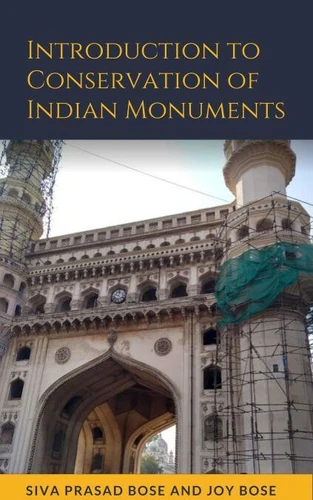
India is home to one of the richest concentrations of ancient monuments in the world - temples, forts, mosques, tombs, palaces, and archaeological sites that span more than five thousand years of continuous civilisation. Many of them are under serious threat. Introduction to Conservation of Indian Monuments is a comprehensive yet accessible overview of how India's built heritage is identified, protected, and restored - and the principles, organisations, and techniques that make this work possible.
The book covers the full landscape of heritage conservation in India: the foundational principles drawn from international charters including the Venice Charter (1964), the Burra Charter, and the Nara Document on Authenticity; the history and conservation policy of the Archaeological Survey of India; the work of INTACH in protecting unprotected monuments; and the architectural traditions - Nagara, Dravida, Kalinga, and Mughal - that conservators must understand before intervening in a monument.
It also addresses the most pressing contemporary challenges: the growing use of digital technologies such as 3D laser scanning, LiDAR, artificial intelligence, and virtual reality in modern conservation; the accelerating damage caused by climate change to coastal temples, desert forts, and ancient stone structures across India; and India's expanding international role in heritage conservation, including ASI's landmark restoration projects at Ta Prohm in Cambodia and the Cham temples at My Son in Vietnam.
Case studies drawn from across India - including Humayun's Tomb, the Brihadeeswara Temple at Thanjavur, the Indus Valley site at Lothal, the transplanted Buddhist complex at Nagarjunakonda, and the Mahabodhi Temple at Bodh Gaya - ground the discussion in real conservation practice. Ideal for students, heritage professionals, architecture enthusiasts, and general readers with an interest in Indian history and culture.
Chapters: Introduction to Principles of Conservation | International Agreements for Conservation of Monuments | Introduction to the Archaeological Survey of India | Introduction to INTACH | Overview of Architectural Styles in Ancient and Medieval India | Techniques for Conservation of Monuments | Examples of Conservation of Monuments in India | Conclusion
India is home to one of the richest concentrations of ancient monuments in the world - temples, forts, mosques, tombs, palaces, and archaeological sites that span more than five thousand years of continuous civilisation. Many of them are under serious threat. Introduction to Conservation of Indian Monuments is a comprehensive yet accessible overview of how India's built heritage is identified, protected, and restored - and the principles, organisations, and techniques that make this work possible.
The book covers the full landscape of heritage conservation in India: the foundational principles drawn from international charters including the Venice Charter (1964), the Burra Charter, and the Nara Document on Authenticity; the history and conservation policy of the Archaeological Survey of India; the work of INTACH in protecting unprotected monuments; and the architectural traditions - Nagara, Dravida, Kalinga, and Mughal - that conservators must understand before intervening in a monument.
It also addresses the most pressing contemporary challenges: the growing use of digital technologies such as 3D laser scanning, LiDAR, artificial intelligence, and virtual reality in modern conservation; the accelerating damage caused by climate change to coastal temples, desert forts, and ancient stone structures across India; and India's expanding international role in heritage conservation, including ASI's landmark restoration projects at Ta Prohm in Cambodia and the Cham temples at My Son in Vietnam.
Case studies drawn from across India - including Humayun's Tomb, the Brihadeeswara Temple at Thanjavur, the Indus Valley site at Lothal, the transplanted Buddhist complex at Nagarjunakonda, and the Mahabodhi Temple at Bodh Gaya - ground the discussion in real conservation practice. Ideal for students, heritage professionals, architecture enthusiasts, and general readers with an interest in Indian history and culture.
Chapters: Introduction to Principles of Conservation | International Agreements for Conservation of Monuments | Introduction to the Archaeological Survey of India | Introduction to INTACH | Overview of Architectural Styles in Ancient and Medieval India | Techniques for Conservation of Monuments | Examples of Conservation of Monuments in India | Conclusion