
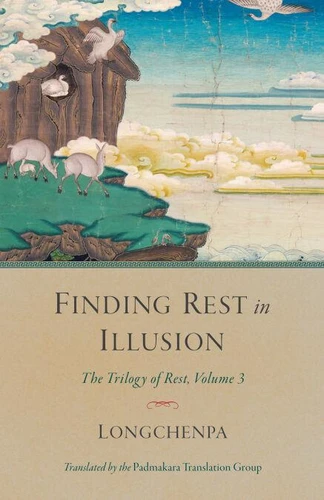
Finding Rest in Illusion
Par :Formats :
Disponible dans votre compte client Decitre ou Furet du Nord dès validation de votre commande. Le format ePub protégé est :
- Compatible avec une lecture sur My Vivlio (smartphone, tablette, ordinateur)
- Compatible avec une lecture sur liseuses Vivlio
- Pour les liseuses autres que Vivlio, vous devez utiliser le logiciel Adobe Digital Edition. Non compatible avec la lecture sur les liseuses Kindle, Remarkable et Sony
- Non compatible avec un achat hors France métropolitaine
 , qui est-ce ?
Notre partenaire de plateforme de lecture numérique où vous retrouverez l'ensemble de vos ebooks gratuitement
Pour en savoir plus sur nos ebooks, consultez notre aide en ligne ici
C'est si simple ! Lisez votre ebook avec l'app Vivlio sur votre tablette, mobile ou ordinateur :

- Nombre de pages320
- FormatePub
- ISBN978-0-8348-4175-8
- EAN9780834841758
- Date de parution08/01/2019
- Protection num.Adobe DRM
- Taille7 Mo
- Infos supplémentairesepub
- ÉditeurShambhala
Résumé
A new translation of the Tibetan master Longchenpa's famous work that systematically presents the path of yogic conduct according to the Dzogchen traditionFinding Rest in Illusion is the third volume of the Trilogy of Rest, Longchenpa's classic exposition of the Buddhist path. The purpose of these teachings is to introduce us to our most basic nature-the clear and pristine awareness that is the nature of the mind.
According to the traditional Tibetan Buddhist formula of view, meditation, and action, this volume follows Finding Rest in the Nature of the Mind, which establishes the view of the Buddhist path generally, and specifically that of the teachings of the Great Perfection, and Finding Rest in Meditation, which outlines the main points of meditation, namely, where one should meditate, what qualities a practitioner should possess and develop, and what should be practiced.
The Padmakara Translation Group has provided us with a clear and fluid new translation of the final volume of the trilogy, Finding Rest in Illusion, along with its autocommentary, The Chariot of Excellence, both intended to elucidate the appropriate action of a Buddhist practitioner. Finding Rest in Illusion describes in detail the conduct of those who have stabilized their recognition of the nature of the mind and how to apply the Buddhist view when relating to ordinary appearances.
Drawing extensively from classic Buddhist works, the author uses well-known examples of illusion found throughout Mahayana literature to illustrate the illusory nature of both sa?sara and nirva?a, thus revealing their ultimate nondual nature. This is an invaluable manual for any genuine student of Buddhism who wishes to truly find rest through the path of the Great Perfection.
According to the traditional Tibetan Buddhist formula of view, meditation, and action, this volume follows Finding Rest in the Nature of the Mind, which establishes the view of the Buddhist path generally, and specifically that of the teachings of the Great Perfection, and Finding Rest in Meditation, which outlines the main points of meditation, namely, where one should meditate, what qualities a practitioner should possess and develop, and what should be practiced.
The Padmakara Translation Group has provided us with a clear and fluid new translation of the final volume of the trilogy, Finding Rest in Illusion, along with its autocommentary, The Chariot of Excellence, both intended to elucidate the appropriate action of a Buddhist practitioner. Finding Rest in Illusion describes in detail the conduct of those who have stabilized their recognition of the nature of the mind and how to apply the Buddhist view when relating to ordinary appearances.
Drawing extensively from classic Buddhist works, the author uses well-known examples of illusion found throughout Mahayana literature to illustrate the illusory nature of both sa?sara and nirva?a, thus revealing their ultimate nondual nature. This is an invaluable manual for any genuine student of Buddhism who wishes to truly find rest through the path of the Great Perfection.
A propos de Longchenpa

29,38 €
22,51 €
29,38 €

17,65 €
