There's a particular kind of silence a director loves: the one right after an ending lands, before the audience knows how to feel about it yet. Damon built his whole career chasing that silence. He got it, once, with a finale so quiet and so cruel that four hundred thousand people never forgave him for it. He never once asked what silence costs the people standing just off camera. He finds out the hard way.
A woman named Nadia - warm, patient, unnervingly easy to talk to - pulls him out of the wreckage of that backlash, and for six weeks he believes, completely, that he's finally been understood. Then she puts something in his wine, and he wakes up somewhere with no windows, taped to a chair that isn't going anywhere, across from a woman who isn't Nadia at all. Her name is Nad. She used to catch falls for a living on his own show, until her hand went through a railing on a shot he pushed too far - and until two of his stars, protecting an affair she'd stumbled across by accident, quietly made sure she never came back.
Damon signed the paperwork himself. He thought it was a scheduling call. He had no idea the job he let her lose was the only thing standing between her mother and a treatment window that ran out eleven weeks later. Nad hasn't brought him here for an apology. She's brought him here to help her finish something - a real ending, staged the way only someone who's spent a career faking death for a camera could stage it, with his two leads playing parts they don't know they've been cast in.
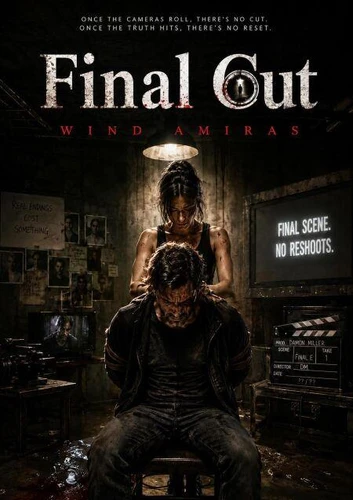
Final Cut is airless and unforgiving by design - a novella about what happens when the people who make a story possible stop being scenery, and start collecting on what they were never paid. Nobody walks out of this one clean. Least of all the man who always thought he was the one in control of how it ended. For mature readers. Contains graphic violence and psychological terror.
There's a particular kind of silence a director loves: the one right after an ending lands, before the audience knows how to feel about it yet. Damon built his whole career chasing that silence. He got it, once, with a finale so quiet and so cruel that four hundred thousand people never forgave him for it. He never once asked what silence costs the people standing just off camera. He finds out the hard way.
A woman named Nadia - warm, patient, unnervingly easy to talk to - pulls him out of the wreckage of that backlash, and for six weeks he believes, completely, that he's finally been understood. Then she puts something in his wine, and he wakes up somewhere with no windows, taped to a chair that isn't going anywhere, across from a woman who isn't Nadia at all. Her name is Nad. She used to catch falls for a living on his own show, until her hand went through a railing on a shot he pushed too far - and until two of his stars, protecting an affair she'd stumbled across by accident, quietly made sure she never came back.
Damon signed the paperwork himself. He thought it was a scheduling call. He had no idea the job he let her lose was the only thing standing between her mother and a treatment window that ran out eleven weeks later. Nad hasn't brought him here for an apology. She's brought him here to help her finish something - a real ending, staged the way only someone who's spent a career faking death for a camera could stage it, with his two leads playing parts they don't know they've been cast in.
Final Cut is airless and unforgiving by design - a novella about what happens when the people who make a story possible stop being scenery, and start collecting on what they were never paid. Nobody walks out of this one clean. Least of all the man who always thought he was the one in control of how it ended. For mature readers. Contains graphic violence and psychological terror.