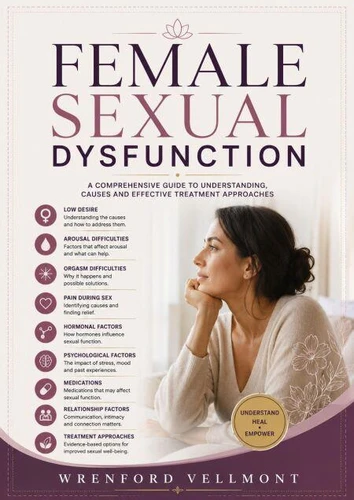
Female Sexual Dysfunction is a practical and informative guide to understanding the physical, hormonal, psychological, and relationship factors that can affect a woman's sexual health. Sexual difficulties are common, yet many women hesitate to discuss them because of embarrassment, misinformation, or the belief that they simply have to live with them. This book provides a clear, compassionate explanation of common concerns including low sexual desire, difficulty becoming aroused, orgasm difficulties, painful sex, vaginal discomfort, and changes in sexual response.
Readers will learn how hormones, menopause, pregnancy, medications, chronic health conditions, stress, anxiety, depression, body image, sleep, relationship dynamics, and previous sexual experiences can influence sexual function.
The book also explains why sexual difficulties should not automatically be blamed on hormones or relationships and why persistent or distressing symptoms may deserve professional evaluation.
Rather than presenting quick fixes or unrealistic promises, this guide explores evidence-based approaches to evaluation and management. It discusses medical assessment, medication review, hormonal and non-hormonal treatment approaches, lubricants and moisturizers, pelvic-floor considerations, counseling, sex therapy, communication, and lifestyle strategies.
It also explains when sexual pain or other symptoms may require medical attention.
Written to inform without judgment, this book encourages women to understand their bodies, communicate openly with healthcare professionals and partners, and make informed decisions about treatment. Female Sexual Dysfunction is designed to replace shame and confusion with knowledge, realistic expectations, and a healthier understanding of female sexual wellness.
Female Sexual Dysfunction is a practical and informative guide to understanding the physical, hormonal, psychological, and relationship factors that can affect a woman's sexual health. Sexual difficulties are common, yet many women hesitate to discuss them because of embarrassment, misinformation, or the belief that they simply have to live with them. This book provides a clear, compassionate explanation of common concerns including low sexual desire, difficulty becoming aroused, orgasm difficulties, painful sex, vaginal discomfort, and changes in sexual response.
Readers will learn how hormones, menopause, pregnancy, medications, chronic health conditions, stress, anxiety, depression, body image, sleep, relationship dynamics, and previous sexual experiences can influence sexual function.
The book also explains why sexual difficulties should not automatically be blamed on hormones or relationships and why persistent or distressing symptoms may deserve professional evaluation.
Rather than presenting quick fixes or unrealistic promises, this guide explores evidence-based approaches to evaluation and management. It discusses medical assessment, medication review, hormonal and non-hormonal treatment approaches, lubricants and moisturizers, pelvic-floor considerations, counseling, sex therapy, communication, and lifestyle strategies.
It also explains when sexual pain or other symptoms may require medical attention.
Written to inform without judgment, this book encourages women to understand their bodies, communicate openly with healthcare professionals and partners, and make informed decisions about treatment. Female Sexual Dysfunction is designed to replace shame and confusion with knowledge, realistic expectations, and a healthier understanding of female sexual wellness.