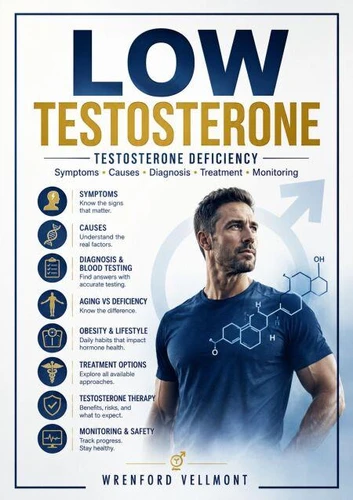
Low Testosterone / Testosterone Deficiency is a practical, evidence-based guide for men who want clear answers about testosterone, aging, sexual health, symptoms, diagnosis, and treatment. Low testosterone can affect much more than sexual desire. It may be associated with fatigue, reduced muscle mass, changes in body composition, mood changes, decreased libido, and other concerns that deserve proper medical evaluation.
This book explains what testosterone does, where it is produced, how levels change with age, and why normal aging should not automatically be confused with testosterone deficiency.
It examines common symptoms and causes, including obesity, chronic illness, sleep problems, lifestyle factors, and disorders affecting hormone production.
Readers will learn how healthcare professionals evaluate suspected testosterone deficiency, why blood testing matters, and how total and free testosterone differ. The guide also explores additional laboratory tests, the challenges of interpreting hormone results, and why symptoms and laboratory findings must be considered together.
Treatment is discussed realistically and without exaggerated promises.
The book explains when testosterone therapy may be appropriate, the major forms of testosterone replacement, potential benefits, possible adverse effects, and the importance of individualized medical care. It also examines lifestyle measures and other approaches that may support hormonal and overall health.
Whether you are experiencing symptoms, have received a low testosterone result, or simply want to understand the subject better, this guide provides a balanced foundation for informed conversations with a qualified healthcare professional.
It emphasizes responsible diagnosis, realistic expectations, appropriate monitoring, and long-term men's health rather than quick fixes or marketing claims.
Low Testosterone / Testosterone Deficiency is a practical, evidence-based guide for men who want clear answers about testosterone, aging, sexual health, symptoms, diagnosis, and treatment. Low testosterone can affect much more than sexual desire. It may be associated with fatigue, reduced muscle mass, changes in body composition, mood changes, decreased libido, and other concerns that deserve proper medical evaluation.
This book explains what testosterone does, where it is produced, how levels change with age, and why normal aging should not automatically be confused with testosterone deficiency.
It examines common symptoms and causes, including obesity, chronic illness, sleep problems, lifestyle factors, and disorders affecting hormone production.
Readers will learn how healthcare professionals evaluate suspected testosterone deficiency, why blood testing matters, and how total and free testosterone differ. The guide also explores additional laboratory tests, the challenges of interpreting hormone results, and why symptoms and laboratory findings must be considered together.
Treatment is discussed realistically and without exaggerated promises.
The book explains when testosterone therapy may be appropriate, the major forms of testosterone replacement, potential benefits, possible adverse effects, and the importance of individualized medical care. It also examines lifestyle measures and other approaches that may support hormonal and overall health.
Whether you are experiencing symptoms, have received a low testosterone result, or simply want to understand the subject better, this guide provides a balanced foundation for informed conversations with a qualified healthcare professional.
It emphasizes responsible diagnosis, realistic expectations, appropriate monitoring, and long-term men's health rather than quick fixes or marketing claims.