SOLDES
Jusqu'à -70% sur une sélection d'articles*

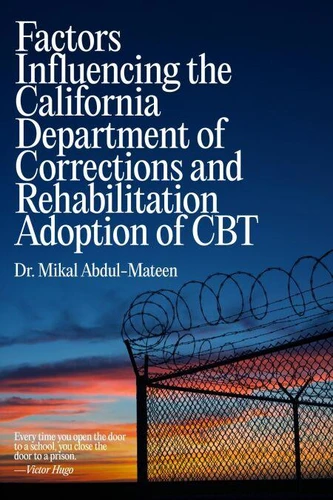
Factors Influencing the California Department of Corrections and Rehabilitation Adoption of CBT
Par :Formats :
Disponible dans votre compte client Decitre ou Furet du Nord dès validation de votre commande. Le format ePub est :
- Compatible avec une lecture sur My Vivlio (smartphone, tablette, ordinateur)
- Compatible avec une lecture sur liseuses Vivlio
- Pour les liseuses autres que Vivlio, vous devez utiliser le logiciel Adobe Digital Edition. Non compatible avec la lecture sur les liseuses Kindle, Remarkable et Sony
 , qui est-ce ?
Notre partenaire de plateforme de lecture numérique où vous retrouverez l'ensemble de vos ebooks gratuitement
Pour en savoir plus sur nos ebooks, consultez notre aide en ligne ici
C'est si simple ! Lisez votre ebook avec l'app Vivlio sur votre tablette, mobile ou ordinateur :

- FormatePub
- ISBN8232827908
- EAN9798232827908
- Date de parution19/11/2025
- Protection num.pas de protection
- Infos supplémentairesepub
- ÉditeurDraft2Digital
Résumé
This book explores the SPUR (Social, Personal Understanding, and Responsibility) cognitive-behavioral education model for correctional education. Traditional programs focusing on literacy, GED, and vocational skills often fail to reduce recidivism because they overlook the cognitive and moral aspects of criminal behavior. SPUR is based on Cognitive Behavioral Therapy (CBT), which helps individuals recognize harmful thoughts, challenge distorted beliefs, and adopt healthier, responsible ways of thinking.
Through dialogue, cooperative learning, role-playing, and reflective journaling, SPUR promotes cognitive restructuring, moral reasoning, empathy, and social skills. Rigorous analysis shows that SPUR participants have lower recidivism rates, improved social reasoning, and better behavioral outcomes than those in traditional programs or no education. This book combines theory, educational principles, and data to advocate for using education as a tool for cognitive and moral transformation, with implications for policy, practice, and social justice.
Through dialogue, cooperative learning, role-playing, and reflective journaling, SPUR promotes cognitive restructuring, moral reasoning, empathy, and social skills. Rigorous analysis shows that SPUR participants have lower recidivism rates, improved social reasoning, and better behavioral outcomes than those in traditional programs or no education. This book combines theory, educational principles, and data to advocate for using education as a tool for cognitive and moral transformation, with implications for policy, practice, and social justice.