Sahar arrives in London on a scholarship with a degree in Persian literature, eager to begin her Master's at the University of Hull's London campus. Her research topic the metaphor of displacement in modern Persian poetry unwittingly mirrors her own life. Heathrow greets her with a grey chill and indifference; while London is dazzling, she soon discovers that its warmth comes with a steep price, and its welcome includes conditions never mentioned in any brochure.?At first, everything goes well.
She loves the Olympic Park campus, finds rare Persian manuscripts tucked away in the British Library, and loses herself in her work under the encouraging mentorship of Professor Martin. Then, the cracks begin to show.?Banking sanctions against Iran cut off her family's financial support, and her scholarship funds fail to arrive despite her repeated efforts to resolve the issue. As her bank account drains, she is forced to scrape by on odd jobs shifts at the library followed by a role at a fast-food counter in the Stratford Centre.
There, she meets Adem, a Turkish shopkeeper whose quiet wisdom provides her with a lifeline. After a desperate attempt to find cheaper housing ends in a scam that wipes out her remaining savings, she is drawn into a money-laundering scheme that nearly costs her everything. When her tuition remains unpaid, the university withdraws its sponsorship, and she receives a formal letter: she has sixty days to leave the country.?With the clock ticking, Sahar completes as much of her thesis as possible before returning to Tehran, exhausted but not defeated.
At Tehran University, she begins a PhD, transforming her experience of displacement into a formal case study. She warns her students about the true costs of studying abroad while teaching them the value of resilience. From this, a theory takes shape: she calls it "the poetry of the bridge" the idea that a writer in exile does not merely voice pain but builds a meeting place between cultures.?Years later, a British Academy postdoctoral fellowship brings her back to London.
This time, she returns as Dr. Sahar, carrying the hard-won wisdom of her past. She reconnects with Adem, her friend Maria, and Professor Martin. Her output becomes prolific: she publishes an autobiographical novel, a collection of stories set in Stratford, a modern retelling of Hafez against a London backdrop, and a biography of her grandmother that spans three generations of Iranian women. She also builds a digital archive of Persian literature and founds the Darya Foundation to champion Persian culture abroad.
Eventually, she becomes a celebrated professor and a sought-after speaker on exile and identity.?By the end, Sahar has become something she never planned to be: a bridge between Tehran and London, between Persian and English, and between who she was and who she is becoming. Exile broke her once, but it also provided the foundation to build something larger. She realizes, finally, that home was never a place; it is something she carries something she built inside herself when there was nowhere else left to stand.
Sahar arrives in London on a scholarship with a degree in Persian literature, eager to begin her Master's at the University of Hull's London campus. Her research topic the metaphor of displacement in modern Persian poetry unwittingly mirrors her own life. Heathrow greets her with a grey chill and indifference; while London is dazzling, she soon discovers that its warmth comes with a steep price, and its welcome includes conditions never mentioned in any brochure.?At first, everything goes well.
She loves the Olympic Park campus, finds rare Persian manuscripts tucked away in the British Library, and loses herself in her work under the encouraging mentorship of Professor Martin. Then, the cracks begin to show.?Banking sanctions against Iran cut off her family's financial support, and her scholarship funds fail to arrive despite her repeated efforts to resolve the issue. As her bank account drains, she is forced to scrape by on odd jobs shifts at the library followed by a role at a fast-food counter in the Stratford Centre.
There, she meets Adem, a Turkish shopkeeper whose quiet wisdom provides her with a lifeline. After a desperate attempt to find cheaper housing ends in a scam that wipes out her remaining savings, she is drawn into a money-laundering scheme that nearly costs her everything. When her tuition remains unpaid, the university withdraws its sponsorship, and she receives a formal letter: she has sixty days to leave the country.?With the clock ticking, Sahar completes as much of her thesis as possible before returning to Tehran, exhausted but not defeated.
At Tehran University, she begins a PhD, transforming her experience of displacement into a formal case study. She warns her students about the true costs of studying abroad while teaching them the value of resilience. From this, a theory takes shape: she calls it "the poetry of the bridge" the idea that a writer in exile does not merely voice pain but builds a meeting place between cultures.?Years later, a British Academy postdoctoral fellowship brings her back to London.
This time, she returns as Dr. Sahar, carrying the hard-won wisdom of her past. She reconnects with Adem, her friend Maria, and Professor Martin. Her output becomes prolific: she publishes an autobiographical novel, a collection of stories set in Stratford, a modern retelling of Hafez against a London backdrop, and a biography of her grandmother that spans three generations of Iranian women. She also builds a digital archive of Persian literature and founds the Darya Foundation to champion Persian culture abroad.
Eventually, she becomes a celebrated professor and a sought-after speaker on exile and identity.?By the end, Sahar has become something she never planned to be: a bridge between Tehran and London, between Persian and English, and between who she was and who she is becoming. Exile broke her once, but it also provided the foundation to build something larger. She realizes, finally, that home was never a place; it is something she carries something she built inside herself when there was nowhere else left to stand.

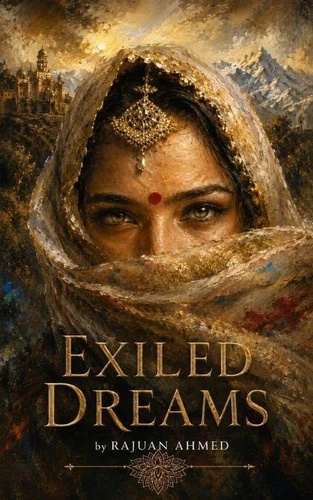

 , qui est-ce ?