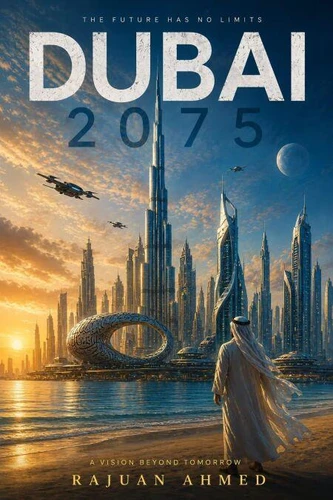
By 2075, Dubai has transformed into an environmental nightmare. Dr. Alia Al-Qasemi, a 55-year-old climate scientist, witnesses the city's daily struggle against extreme heat and humidity that makes human survival a relentless battle. The wet-bulb temperature regularly exceeds 36°C, a threshold fatal to the human body. Alia, born to an Emirati father and a Bangladeshi mother, works at the Dubai Institute of Climate Research.
Although her son, Hamza, lives in London and repeatedly begs her to relocate, she remains deeply committed to her city and her research. Meanwhile, as the Persian Gulf reaches unprecedented temperatures, desalination plants collapse, crippling the water supply. Frequent power outages trigger a vicious cycle that threatens the city's remaining infrastructure. The city's migrant labor force-primarily workers from Bangladesh, Pakistan, India, Nepal, and the Philippines-bears the brunt of the crisis.
Over 2, 500 laborers died from heatstroke the previous year alone. Alia personally saves one such worker, Mohammad Idris from Comilla, Bangladesh, after finding him on the verge of death from extreme heat on a public street. When Cyclone Harmattan strikes Dubai with unprecedented fury, it exposes the city's extreme vulnerability. Fueled by warming ocean waters, the devastating storm collapses critical infrastructure and utterly destroys the migrant laborer camps.
In the grim aftermath, Alia realizes that while the wealthy elite have fled, the poor are left behind to pick up the pieces. In response, Alia launches "Green Roots, " a community garden project designed to provide displaced workers with food, training, and purpose. Idris steps up as its supervisor, finding personal renewal through working with the earth. The initiative quickly spreads across the city, teaching practical skills and sustainable agriculture techniques.
However, years of breathing Dubai's toxic air cause Alia to develop severe pulmonary fibrosis. Despite her deteriorating health, her doctors' warnings, and her son's heartfelt pleas, she refuses to abandon her post. Instead, she pours her thoughts into a notebook, a testament and warning to future generations about how human hubris attempted to conquer nature. She documents the city's fatal illusion: believing that money and technology could ever replace environmental balance.
In November 2075, Alia passes away, but her vision lives on. Hamza dedicates his life to continuing her work, expanding Green Roots across the UAE and eventually around the world. Idris's daughters receive an education and carry her legacy forward, while Alia's published notebook, titled The Last Letter of the Century, sparks a global environmental movement. The story concludes at Alia Garden, a flourishing sanctuary in Deira that serves as a living testament that hope can bloom even in the desert.
Ultimately, the narrative reinforces a powerful lesson: love, rather than technology, is humanity's greatest key to survival, and small, compassionate actions can seed lasting global change.
By 2075, Dubai has transformed into an environmental nightmare. Dr. Alia Al-Qasemi, a 55-year-old climate scientist, witnesses the city's daily struggle against extreme heat and humidity that makes human survival a relentless battle. The wet-bulb temperature regularly exceeds 36°C, a threshold fatal to the human body. Alia, born to an Emirati father and a Bangladeshi mother, works at the Dubai Institute of Climate Research.
Although her son, Hamza, lives in London and repeatedly begs her to relocate, she remains deeply committed to her city and her research. Meanwhile, as the Persian Gulf reaches unprecedented temperatures, desalination plants collapse, crippling the water supply. Frequent power outages trigger a vicious cycle that threatens the city's remaining infrastructure. The city's migrant labor force-primarily workers from Bangladesh, Pakistan, India, Nepal, and the Philippines-bears the brunt of the crisis.
Over 2, 500 laborers died from heatstroke the previous year alone. Alia personally saves one such worker, Mohammad Idris from Comilla, Bangladesh, after finding him on the verge of death from extreme heat on a public street. When Cyclone Harmattan strikes Dubai with unprecedented fury, it exposes the city's extreme vulnerability. Fueled by warming ocean waters, the devastating storm collapses critical infrastructure and utterly destroys the migrant laborer camps.
In the grim aftermath, Alia realizes that while the wealthy elite have fled, the poor are left behind to pick up the pieces. In response, Alia launches "Green Roots, " a community garden project designed to provide displaced workers with food, training, and purpose. Idris steps up as its supervisor, finding personal renewal through working with the earth. The initiative quickly spreads across the city, teaching practical skills and sustainable agriculture techniques.
However, years of breathing Dubai's toxic air cause Alia to develop severe pulmonary fibrosis. Despite her deteriorating health, her doctors' warnings, and her son's heartfelt pleas, she refuses to abandon her post. Instead, she pours her thoughts into a notebook, a testament and warning to future generations about how human hubris attempted to conquer nature. She documents the city's fatal illusion: believing that money and technology could ever replace environmental balance.
In November 2075, Alia passes away, but her vision lives on. Hamza dedicates his life to continuing her work, expanding Green Roots across the UAE and eventually around the world. Idris's daughters receive an education and carry her legacy forward, while Alia's published notebook, titled The Last Letter of the Century, sparks a global environmental movement. The story concludes at Alia Garden, a flourishing sanctuary in Deira that serves as a living testament that hope can bloom even in the desert.
Ultimately, the narrative reinforces a powerful lesson: love, rather than technology, is humanity's greatest key to survival, and small, compassionate actions can seed lasting global change.


 , qui est-ce ?