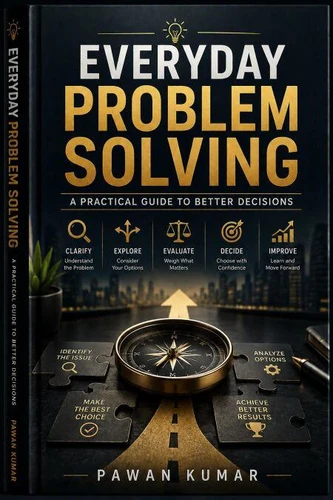
Everyday Problem Solving is a practical guide for developing a clearer, calmer, and more structured approach to the problems that arise in everyday life. From small daily difficulties to situations that require careful decisions, problems are a normal part of life, but the way we respond to them can make a meaningful difference. This book explores practical ways to understand a problem before reacting to it, identify the information that matters, separate facts from assumptions, consider possible solutions, and choose realistic actions.
It emphasizes thoughtful decision-making rather than rushed reactions and encourages readers to look at challenges from different perspectives. Readers will learn how to break complicated situations into smaller and more manageable parts, identify priorities, compare alternatives, recognize potential consequences, and develop practical action plans. The book also discusses the importance of flexibility, patience, communication, organization, and learning from previous experiences.
Everyday problems do not always have perfect solutions. Sometimes the best approach is to find the most reasonable option with the information available, take a practical step, observe the result, and adjust when necessary. This book presents problem solving as an ongoing skill that can be improved through awareness, practice, reflection, and experience. The chapters provide a general framework that can be adapted to different situations and personal circumstances.
Whether a reader is dealing with an everyday decision, an unexpected challenge, competing priorities, or a situation that feels difficult to organize, the ideas in this book are designed to encourage clearer thinking and more deliberate action. The goal is not to eliminate every problem, but to develop a better way of approaching problems when they occur. By building practical problem-solving habits, readers can become more confident in evaluating situations, making thoughtful choices, taking appropriate action, and learning from the outcomes.
Everyday Problem Solving is written for readers who want a straightforward and practical introduction to better problem-solving habits and more thoughtful everyday decision-making.
Everyday Problem Solving is a practical guide for developing a clearer, calmer, and more structured approach to the problems that arise in everyday life. From small daily difficulties to situations that require careful decisions, problems are a normal part of life, but the way we respond to them can make a meaningful difference. This book explores practical ways to understand a problem before reacting to it, identify the information that matters, separate facts from assumptions, consider possible solutions, and choose realistic actions.
It emphasizes thoughtful decision-making rather than rushed reactions and encourages readers to look at challenges from different perspectives. Readers will learn how to break complicated situations into smaller and more manageable parts, identify priorities, compare alternatives, recognize potential consequences, and develop practical action plans. The book also discusses the importance of flexibility, patience, communication, organization, and learning from previous experiences.
Everyday problems do not always have perfect solutions. Sometimes the best approach is to find the most reasonable option with the information available, take a practical step, observe the result, and adjust when necessary. This book presents problem solving as an ongoing skill that can be improved through awareness, practice, reflection, and experience. The chapters provide a general framework that can be adapted to different situations and personal circumstances.
Whether a reader is dealing with an everyday decision, an unexpected challenge, competing priorities, or a situation that feels difficult to organize, the ideas in this book are designed to encourage clearer thinking and more deliberate action. The goal is not to eliminate every problem, but to develop a better way of approaching problems when they occur. By building practical problem-solving habits, readers can become more confident in evaluating situations, making thoughtful choices, taking appropriate action, and learning from the outcomes.
Everyday Problem Solving is written for readers who want a straightforward and practical introduction to better problem-solving habits and more thoughtful everyday decision-making.