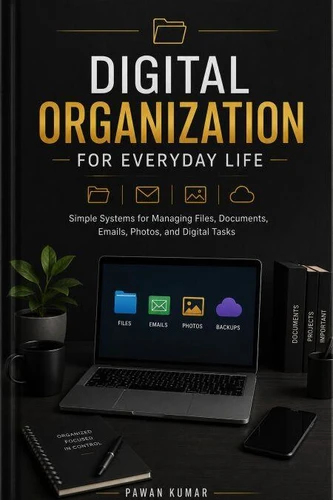
Digital Organization for Everyday Life is a practical guide for building a more organized and manageable digital life. Modern life depends heavily on digital devices and information. Documents, photos, emails, files, notes, accounts, applications, downloads, and other digital materials can quickly become difficult to manage. When digital information is scattered across different places, finding what you need can take time and create unnecessary frustration.
This book introduces simple principles for understanding and improving everyday digital organization. Instead of focusing on complicated technical systems, it encourages clear thinking, consistent habits, and practical organization methods that can be adapted to different lifestyles and levels of digital experience. The book explores the importance of creating order in a digital environment, understanding what needs to be organized, reducing unnecessary digital clutter, and developing routines that make information easier to find and manage.
It also emphasizes the value of consistency. A good organizational system is not only about arranging things once; it is about creating habits that can be maintained over time. Digital organization can also improve the way people approach their everyday tasks. When important information is easier to locate and digital spaces are easier to understand, people can spend less time searching and more time focusing on what actually matters.
Throughout the book, the focus remains on practical awareness, thoughtful decision-making, and sustainable habits. Readers are encouraged to evaluate their existing digital environment, identify areas that create confusion, and gradually introduce better organization practices rather than trying to change everything at once. Digital Organization for Everyday Life is designed for readers who want a clearer and more structured approach to managing their everyday digital information.
Whether someone is dealing with a crowded collection of files, an overloaded digital workspace, scattered information, or simply wants to develop better organizational habits, the ideas presented in this book can provide a useful starting point. The goal is not digital perfection. The goal is to create a digital environment that feels clearer, easier to manage, and more useful in everyday life. By developing simple organizational habits and applying them consistently, readers can work toward a more structured digital routine and a better relationship with the information they use every day.
Digital Organization for Everyday Life is a practical guide for building a more organized and manageable digital life. Modern life depends heavily on digital devices and information. Documents, photos, emails, files, notes, accounts, applications, downloads, and other digital materials can quickly become difficult to manage. When digital information is scattered across different places, finding what you need can take time and create unnecessary frustration.
This book introduces simple principles for understanding and improving everyday digital organization. Instead of focusing on complicated technical systems, it encourages clear thinking, consistent habits, and practical organization methods that can be adapted to different lifestyles and levels of digital experience. The book explores the importance of creating order in a digital environment, understanding what needs to be organized, reducing unnecessary digital clutter, and developing routines that make information easier to find and manage.
It also emphasizes the value of consistency. A good organizational system is not only about arranging things once; it is about creating habits that can be maintained over time. Digital organization can also improve the way people approach their everyday tasks. When important information is easier to locate and digital spaces are easier to understand, people can spend less time searching and more time focusing on what actually matters.
Throughout the book, the focus remains on practical awareness, thoughtful decision-making, and sustainable habits. Readers are encouraged to evaluate their existing digital environment, identify areas that create confusion, and gradually introduce better organization practices rather than trying to change everything at once. Digital Organization for Everyday Life is designed for readers who want a clearer and more structured approach to managing their everyday digital information.
Whether someone is dealing with a crowded collection of files, an overloaded digital workspace, scattered information, or simply wants to develop better organizational habits, the ideas presented in this book can provide a useful starting point. The goal is not digital perfection. The goal is to create a digital environment that feels clearer, easier to manage, and more useful in everyday life. By developing simple organizational habits and applying them consistently, readers can work toward a more structured digital routine and a better relationship with the information they use every day.