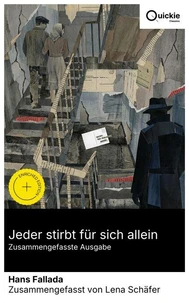
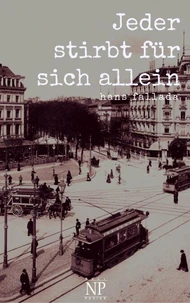
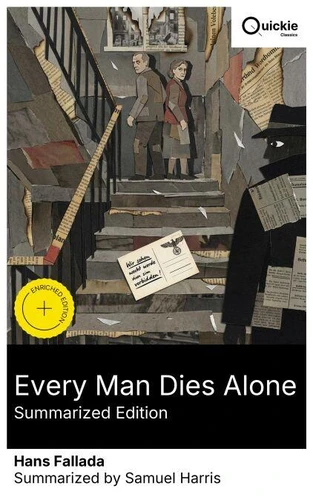
Every Man Dies Alone follows Otto and Anna Quangel, modest Berliners who leave anonymous postcards denouncing the regime after their son is killed at the front. The campaign threads through stairwells, offices, and police files, attracting a relentless investigator. In plain, documentary prose and multiple viewpoints, Fallada crafts a tense hybrid of urban chronicle and police procedural rooted in a real case.
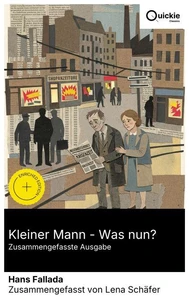
Hans Fallada (Rudolf Ditzen) had long chronicled ordinary Germans under strain, notably in Little Man, What Now?. Remaining in Germany during the Nazi years, he witnessed coercion, compromise, and petty heroism at close range. In 1946 Berlin authorities gave him the Gestapo file on Otto and Elise Hampel; drawing on it, he wrote this novel swiftly, just before his death. This book is indispensable for readers seeking to understand how authoritarianism enters daily habits and housing blocks, and how courage can be both humble and immense.
It will reward historians of everyday life and lovers of the European realist novel alike. Read it for its steady moral gaze and its granular portrait of Berlin under surveillance.
Quickie Classics summarizes timeless works with precision, preserving the author's voice and keeping the prose clear, fast, and readable-distilled, never diluted. Enriched Edition extras: Introduction · Synopsis · Historical Context · Brief Analysis · 4 Reflection Q&As · Editorial Footnotes.
Every Man Dies Alone follows Otto and Anna Quangel, modest Berliners who leave anonymous postcards denouncing the regime after their son is killed at the front. The campaign threads through stairwells, offices, and police files, attracting a relentless investigator. In plain, documentary prose and multiple viewpoints, Fallada crafts a tense hybrid of urban chronicle and police procedural rooted in a real case.
Hans Fallada (Rudolf Ditzen) had long chronicled ordinary Germans under strain, notably in Little Man, What Now?. Remaining in Germany during the Nazi years, he witnessed coercion, compromise, and petty heroism at close range. In 1946 Berlin authorities gave him the Gestapo file on Otto and Elise Hampel; drawing on it, he wrote this novel swiftly, just before his death. This book is indispensable for readers seeking to understand how authoritarianism enters daily habits and housing blocks, and how courage can be both humble and immense.
It will reward historians of everyday life and lovers of the European realist novel alike. Read it for its steady moral gaze and its granular portrait of Berlin under surveillance.
Quickie Classics summarizes timeless works with precision, preserving the author's voice and keeping the prose clear, fast, and readable-distilled, never diluted. Enriched Edition extras: Introduction · Synopsis · Historical Context · Brief Analysis · 4 Reflection Q&As · Editorial Footnotes.

 , qui est-ce ?