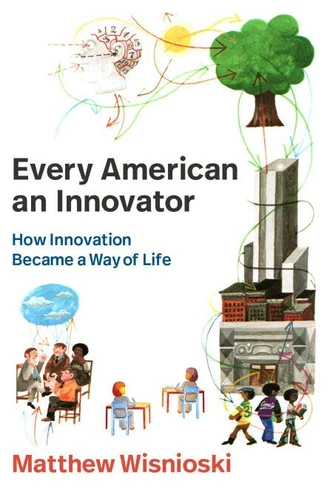
A landmark cultural history that reveals how the relentless pursuit of innovation has transformed our society, our institutions, and our inner selves. For half a century, innovation served as a universal good in an age of fracture. That consensus is cracking. While the imperative to innovate for a better future continues to fuel systemic change around the world, critics now assail innovation culture as an engine of inequality or accuse its do-gooders of woke groupthink.
What happened? Drawing on a decade of research, Every American an Innovator by Matthew Wisnioski investigates how innovation-a once obscure academic term-became ingrained in our institutions, our education, and our beliefs about ourselves. Wisnioski argues that innovation culture did not spring from the digital revolution, nor can it be boiled down to heroic entrepreneurs or villainous capitalists.
Instead, he reveals the central role of a new class of experts in spreading toolkits and mindsets from the cornfields of 1940s Iowa to Silicon Valley tech giants today. This group of engineers, philosophers, bureaucrats, and business leaders posited that "innovators" were society's most important change agents and remade the nation in their image. The innovation culture they built transcended partisan divisions and made strange bedfellows.
Wisnioski shows how Kennedy-era policymakers inspired President Nixon's dream of a Nobel Prize for innovators, how anti-military professors built the first university incubators for entrepreneurs, how radical feminists became millionaire consultants, how demands for a rust belt manufacturing renaissance inspired theories of a global creative class, how programs that encouraged girls and minority children to pursue innovative lives changed the nature of childhood play, and why the innovation consensus is now in dispute.
A landmark cultural history that reveals how the relentless pursuit of innovation has transformed our society, our institutions, and our inner selves. For half a century, innovation served as a universal good in an age of fracture. That consensus is cracking. While the imperative to innovate for a better future continues to fuel systemic change around the world, critics now assail innovation culture as an engine of inequality or accuse its do-gooders of woke groupthink.
What happened? Drawing on a decade of research, Every American an Innovator by Matthew Wisnioski investigates how innovation-a once obscure academic term-became ingrained in our institutions, our education, and our beliefs about ourselves. Wisnioski argues that innovation culture did not spring from the digital revolution, nor can it be boiled down to heroic entrepreneurs or villainous capitalists.
Instead, he reveals the central role of a new class of experts in spreading toolkits and mindsets from the cornfields of 1940s Iowa to Silicon Valley tech giants today. This group of engineers, philosophers, bureaucrats, and business leaders posited that "innovators" were society's most important change agents and remade the nation in their image. The innovation culture they built transcended partisan divisions and made strange bedfellows.
Wisnioski shows how Kennedy-era policymakers inspired President Nixon's dream of a Nobel Prize for innovators, how anti-military professors built the first university incubators for entrepreneurs, how radical feminists became millionaire consultants, how demands for a rust belt manufacturing renaissance inspired theories of a global creative class, how programs that encouraged girls and minority children to pursue innovative lives changed the nature of childhood play, and why the innovation consensus is now in dispute.

 , qui est-ce ?