
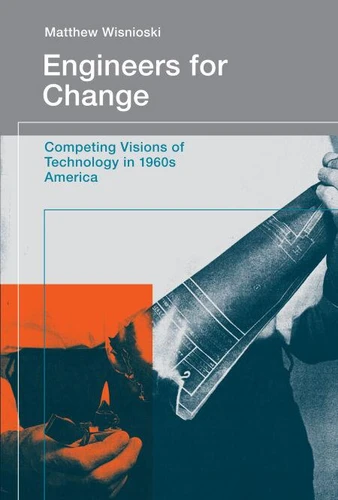
Engineers for Change. Competing Visions of Technology in 1960s America
Par :Formats :
Disponible dans votre compte client Decitre ou Furet du Nord dès validation de votre commande. Le format ePub protégé est :
- Compatible avec une lecture sur My Vivlio (smartphone, tablette, ordinateur)
- Compatible avec une lecture sur liseuses Vivlio
- Pour les liseuses autres que Vivlio, vous devez utiliser le logiciel Adobe Digital Edition. Non compatible avec la lecture sur les liseuses Kindle, Remarkable et Sony
- Non compatible avec un achat hors France métropolitaine
 , qui est-ce ?
Notre partenaire de plateforme de lecture numérique où vous retrouverez l'ensemble de vos ebooks gratuitement
Pour en savoir plus sur nos ebooks, consultez notre aide en ligne ici
C'est si simple ! Lisez votre ebook avec l'app Vivlio sur votre tablette, mobile ou ordinateur :

- Nombre de pages304
- FormatePub
- ISBN978-0-262-30426-9
- EAN9780262304269
- Date de parution19/10/2012
- Protection num.Adobe DRM
- Taille9 Mo
- Infos supplémentairesepub
- ÉditeurThe MIT Press
Résumé
An account of conflicts within engineering in the 1960s that helped shape our dominant contemporary understanding of technological change as the driver of history. In the late 1960s an eclectic group of engineers joined the antiwar and civil rights activists of the time in agitating for change. The engineers were fighting to remake their profession, challenging their fellow engineers to embrace a more humane vision of technology.
In Engineers for Change, Matthew Wisnioski offers an account of this conflict within engineering, linking it to deep-seated assumptions about technology and American life. The postwar period in America saw a near-utopian belief in technology's beneficence. Beginning in the mid-1960s, however, society-influenced by the antitechnology writings of such thinkers as Jacques Ellul and Lewis Mumford-began to view technology in a more negative light.
Engineers themselves were seen as conformist organization men propping up the military-industrial complex. A dissident minority of engineers offered critiques of their profession that appropriated concepts from technology's critics. These dissidents were criticized in turn by conservatives who regarded them as countercultural Luddites. And yet, as Wisnioski shows, the radical minority spurred the professional elite to promote a new understanding of technology as a rapidly accelerating force that our institutions are ill-equipped to handle.
The negative consequences of technology spring from its very nature-and not from engineering's failures. "Sociotechnologists" were recruited to help society adjust to its technology. Wisnioski argues that in responding to the challenges posed by critics within their profession, engineers in the 1960s helped shape our dominant contemporary understanding of technological change as the driver of history.
In Engineers for Change, Matthew Wisnioski offers an account of this conflict within engineering, linking it to deep-seated assumptions about technology and American life. The postwar period in America saw a near-utopian belief in technology's beneficence. Beginning in the mid-1960s, however, society-influenced by the antitechnology writings of such thinkers as Jacques Ellul and Lewis Mumford-began to view technology in a more negative light.
Engineers themselves were seen as conformist organization men propping up the military-industrial complex. A dissident minority of engineers offered critiques of their profession that appropriated concepts from technology's critics. These dissidents were criticized in turn by conservatives who regarded them as countercultural Luddites. And yet, as Wisnioski shows, the radical minority spurred the professional elite to promote a new understanding of technology as a rapidly accelerating force that our institutions are ill-equipped to handle.
The negative consequences of technology spring from its very nature-and not from engineering's failures. "Sociotechnologists" were recruited to help society adjust to its technology. Wisnioski argues that in responding to the challenges posed by critics within their profession, engineers in the 1960s helped shape our dominant contemporary understanding of technological change as the driver of history.
A propos de Matthew Wisnioski

44,14 €