
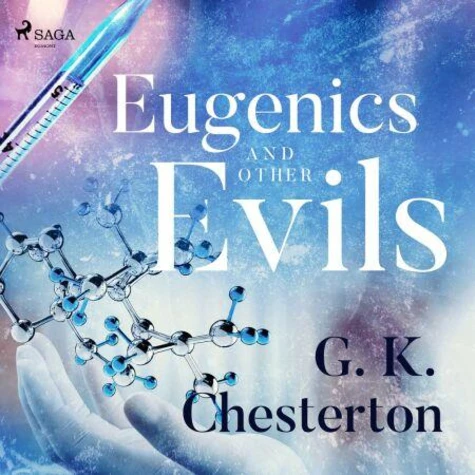
Eugenics and Other Evils
Par : ,Formats :
Disponible dans votre compte client Decitre ou Furet du Nord dès validation de votre commande. Le format MP3 est :
- Pour les liseuses autres que Vivlio, vous devez utiliser le logiciel Adobe Digital Edition. Non compatible avec la lecture sur les liseuses Kindle, Remarkable et Sony
 , qui est-ce ?
Notre partenaire de plateforme de lecture numérique où vous retrouverez l'ensemble de vos ebooks gratuitement
Pour en savoir plus sur nos ebooks, consultez notre aide en ligne ici
C'est si simple ! Lisez votre ebook avec l'app Vivlio sur votre tablette, mobile ou ordinateur :

- FormatMP3
- ISBN978-91-7639-158-7
- EAN9789176391587
- Date de parution04/01/2017
- Protection num.pas de protection
- Taille224 Mo
- Infos supplémentairesaudio
- ÉditeurSAGA Egmont
Résumé
"The Frenchman works until he can play. The American works until he can't play; and then thanks the devil, his master, that he is donkey enough to die in harness. But the Englishman, as he has since become, works until he can pretend that he never worked at all."
'Eugenics and Other Evils' (1922) is a magnificent takedown of the entire basis of eugenic thought - the idea that controlled breeding will improve the human population.
But it is about far more than eugenics: it is about how evil succeeds subtly, about politics and elitism, and it is a profound argument against unregulated capitalism. 'Eugenics and Other Evils' is a well-written, well-argued and incredibly interesting piece of writing. Gilbert Keith Chesterton (1874-1936) was one of the most prolific English writers of all time. He wrote poems, plays, essays, newspaper columns, and is especially known for his fictional priest detective Father Brown.
His "frenemy", the author of Pygmalion, George Bernard Shaw, famously called him "a man of colossal genius" and the two of them would often engage in friendly public discussions with people like H. G. Wells and Clarence Darrow. Chesterton died in his home, and his last known words were a greeting to his wife, author Frances Blogg.
But it is about far more than eugenics: it is about how evil succeeds subtly, about politics and elitism, and it is a profound argument against unregulated capitalism. 'Eugenics and Other Evils' is a well-written, well-argued and incredibly interesting piece of writing. Gilbert Keith Chesterton (1874-1936) was one of the most prolific English writers of all time. He wrote poems, plays, essays, newspaper columns, and is especially known for his fictional priest detective Father Brown.
His "frenemy", the author of Pygmalion, George Bernard Shaw, famously called him "a man of colossal genius" and the two of them would often engage in friendly public discussions with people like H. G. Wells and Clarence Darrow. Chesterton died in his home, and his last known words were a greeting to his wife, author Frances Blogg.
A propos de G. K. Chesterton
0,99 €
0,99 €
0,99 €
4,99 €
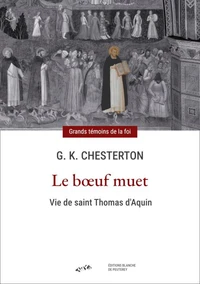
Le bœuf muet
E-book
3,49 €
4,99 €
4,99 €
4,99 €
1,99 €
Le Nommé Jeudi
E-book
0,99 €
4,99 €
L'osteria volante
E-book
5,99 €
5,99 €
2,99 €
B. J. Harrison Reads The Blue Cross
Audiobook
5,99 €

11,99 €