
The author of this volume Dr. Ratan Lal Basu is a Ph. D. in Economics (on Arthasastra, the treatise on political economy and statecraft composed by a Brahma?a scholar Kau?ilya around 300 B. C.). He retired as principal from a Government-Sponsored College at Kolkata, and after retirement got fully occupied with research and publishing activities pertaining to Indology, ancient economics, modern economic problems, economic history, yoga and tantra cult, statecraft, international relations and espionage, ethics and morality and also fiction in English and Bengali (his mother tongue).
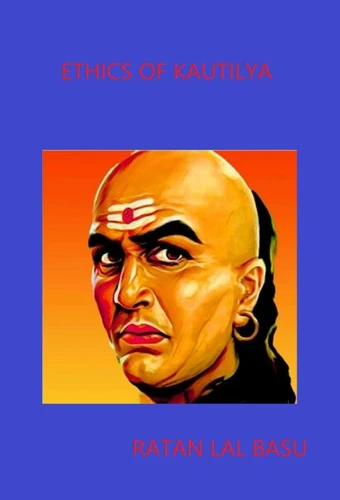
Ethics of Kautilya
Par :Formats :
Disponible dans votre compte client Decitre ou Furet du Nord dès validation de votre commande. Le format ePub est :
- Compatible avec une lecture sur My Vivlio (smartphone, tablette, ordinateur)
- Compatible avec une lecture sur liseuses Vivlio
- Pour les liseuses autres que Vivlio, vous devez utiliser le logiciel Adobe Digital Edition. Non compatible avec la lecture sur les liseuses Kindle, Remarkable et Sony
 , qui est-ce ?
Notre partenaire de plateforme de lecture numérique où vous retrouverez l'ensemble de vos ebooks gratuitement
Pour en savoir plus sur nos ebooks, consultez notre aide en ligne ici
C'est si simple ! Lisez votre ebook avec l'app Vivlio sur votre tablette, mobile ou ordinateur :

- FormatePub
- ISBN8227634917
- EAN9798227634917
- Date de parution28/07/2024
- Protection num.pas de protection
- Infos supplémentairesepub
- ÉditeurBig Dog Books, LLC
Résumé
Ethical principles of Kautilya (alias Chanakya), the Chief Minister and Chief adviser of Chandragupta Maurya, the founder of the great Mauryan Empire, are embedded in his two minor works (the major work being Arthasastra) 'Chanakya Niti' and 'Chanakya Sutram'. Written around 300 B. C. in Aphorisms, i.e. pithy sentences providing ethical guidelines for people in all walks of life (ordinary people up to the king) and for all conceivable family and social relations, are relevant even for modern societies.
The writings of Kautilya were mentioned and partially quoted in various available ancient Indian texts; but the manuscripts of the original text was not available to the scholars till 1909. The manuscripts (written in Early-Grantha Script4) were discovered by Shamasastry, the librarian of Oriental Manuscripts Library of Mysore from the house of a native Brahma?a scholar in 1902 and the edited full text in Devanagari Script was published by him in 1909 and later on the text was translated in English by him and many other scholars.
The major work, viz. Arthasastra concersns Politics and Economics. on the other hand the minor works contain his ethical principles in the form of Aphorisms.
The writings of Kautilya were mentioned and partially quoted in various available ancient Indian texts; but the manuscripts of the original text was not available to the scholars till 1909. The manuscripts (written in Early-Grantha Script4) were discovered by Shamasastry, the librarian of Oriental Manuscripts Library of Mysore from the house of a native Brahma?a scholar in 1902 and the edited full text in Devanagari Script was published by him in 1909 and later on the text was translated in English by him and many other scholars.
The major work, viz. Arthasastra concersns Politics and Economics. on the other hand the minor works contain his ethical principles in the form of Aphorisms.
A propos de Ratan Lal Basu
Lessons of Panchatantra
E-book
4,99 €
4,99 €
2,99 €
3,99 €
2,99 €
3,49 €
3,99 €
3,99 €
4,99 €

Tantra Cult and Yoga
E-book
4,99 €

3,99 €
4,99 €
3,99 €
The Curse of the Goddess
E-book
2,99 €
0,99 €
4,99 €