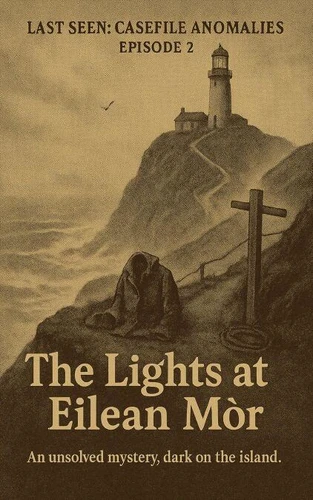
Flannan Isles, Scotland. December 1900. A lighthouse that should never go dark does exactly that. When the relief ship reaches Eilean Mòr, the signal is gone. No light. No horn. No response. Inside the tower, everything suggests interruption. A chair is overturned. A meal sits untouched. The clock has stopped. Three men are missing. No bodies are found. No clear tracks lead away. Only partial signs remain-two oilskins gone, one left behind, and storm damage at the western landing that suggests something sudden and forceful.
The Lights at Eilean Mòr reconstructs the case using official reports, environmental conditions, and practical analysis of the lighthouse structure and surrounding terrain. It strips away later embellishment and returns to the original record, focusing on what can be supported by evidence. The result is not a story of legend, but a study in how quickly routine work can turn irreversible-and how a remote system can fail without leaving a complete answer behind.
This is not a mystery built on imagination. It is one built on what remains when explanation runs out.
Flannan Isles, Scotland. December 1900. A lighthouse that should never go dark does exactly that. When the relief ship reaches Eilean Mòr, the signal is gone. No light. No horn. No response. Inside the tower, everything suggests interruption. A chair is overturned. A meal sits untouched. The clock has stopped. Three men are missing. No bodies are found. No clear tracks lead away. Only partial signs remain-two oilskins gone, one left behind, and storm damage at the western landing that suggests something sudden and forceful.
The Lights at Eilean Mòr reconstructs the case using official reports, environmental conditions, and practical analysis of the lighthouse structure and surrounding terrain. It strips away later embellishment and returns to the original record, focusing on what can be supported by evidence. The result is not a story of legend, but a study in how quickly routine work can turn irreversible-and how a remote system can fail without leaving a complete answer behind.
This is not a mystery built on imagination. It is one built on what remains when explanation runs out.

 , qui est-ce ?