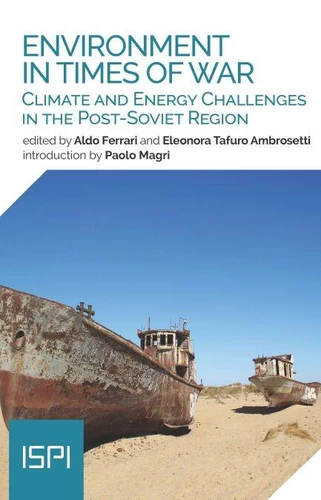
Enviroment in Times of War. Climate and Energy Challenges in the Post-Soviet Region
Par : ,Formats :
Disponible dans votre compte client Decitre ou Furet du Nord dès validation de votre commande. Le format ePub est :
- Compatible avec une lecture sur My Vivlio (smartphone, tablette, ordinateur)
- Compatible avec une lecture sur liseuses Vivlio
- Pour les liseuses autres que Vivlio, vous devez utiliser le logiciel Adobe Digital Edition. Non compatible avec la lecture sur les liseuses Kindle, Remarkable et Sony
 , qui est-ce ?
Notre partenaire de plateforme de lecture numérique où vous retrouverez l'ensemble de vos ebooks gratuitement
Pour en savoir plus sur nos ebooks, consultez notre aide en ligne ici
C'est si simple ! Lisez votre ebook avec l'app Vivlio sur votre tablette, mobile ou ordinateur :

- Nombre de pages145
- FormatePub
- ISBN978-88-5526-734-2
- EAN9788855267342
- Date de parution27/07/2022
- Protection num.Digital Watermarking
- Taille2 Mo
- Infos supplémentairesepub
- ÉditeurLedizioni
Résumé
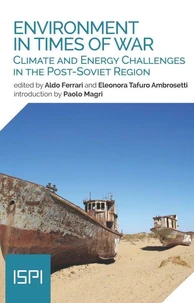
The impact of Russia's war against Ukraine has been devastating both politically and environmentally. On top of the environmental damage directly caused by military operations, the invasion has put an abrupt end to the EU-Russia "green cooperation", which had previously raised many hopes. At the same time, it has also shifted international attention away from climate and environmental concerns, which are particularly acute in the post-Soviet region.
This Report analyses some of the main climate change and environmental issues in the post-Soviet space, providing an initial assessment of the invasion's impact.
The bulk of the latest scholarly and policy production on these matters focuses on Russia - given the country's geopolitical and energy relevance. However, this analysis finds that environmental disasters such as the desertification of the Aral Sea transcend state borders and require a broader approach both from an analytic and policy standpoint.
The bulk of the latest scholarly and policy production on these matters focuses on Russia - given the country's geopolitical and energy relevance. However, this analysis finds that environmental disasters such as the desertification of the Aral Sea transcend state borders and require a broader approach both from an analytic and policy standpoint.