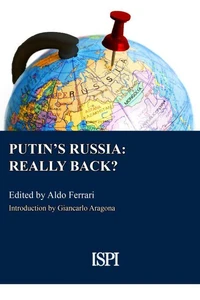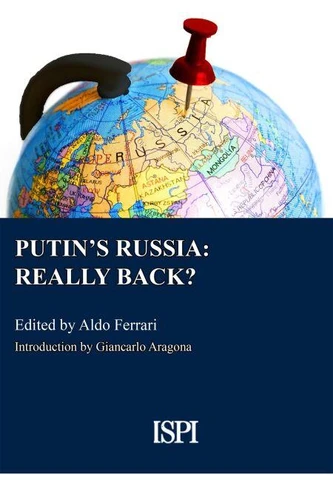
Putin's Russia: Really Back?
Par :Formats :
Disponible dans votre compte client Decitre ou Furet du Nord dès validation de votre commande. Le format ePub est :
- Compatible avec une lecture sur My Vivlio (smartphone, tablette, ordinateur)
- Compatible avec une lecture sur liseuses Vivlio
- Pour les liseuses autres que Vivlio, vous devez utiliser le logiciel Adobe Digital Edition. Non compatible avec la lecture sur les liseuses Kindle, Remarkable et Sony
 , qui est-ce ?
Notre partenaire de plateforme de lecture numérique où vous retrouverez l'ensemble de vos ebooks gratuitement
Pour en savoir plus sur nos ebooks, consultez notre aide en ligne ici
C'est si simple ! Lisez votre ebook avec l'app Vivlio sur votre tablette, mobile ou ordinateur :

- FormatePub
- ISBN978-88-6705-482-4
- EAN9788867054824
- Date de parution28/10/2016
- Protection num.Digital Watermarking
- Taille818 Ko
- Infos supplémentairesepub
- ÉditeurLedizioni
Résumé
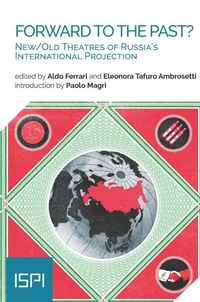
Attempts by Washington and Brussels to push Russia to the fringes of global politics because of the Ukrainian crisis seem to have failed. Thanks to its important role in mediating the Iranian nuclear agreement, and to its unexpected military intervention in Syria, Moscow proved once again to be a key player in international politics. However, Russia's recovered assertiveness may represents a challenge to the uncertain leadership of the West.
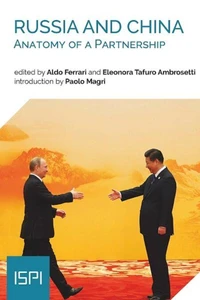
This report aims to gauging Russia's current role in the light of recent developments on the international stage. The overall Russian foreign policy strategy is examined by taking into account its most important issues: Ukraine and the relationship with the West; the Middle East (intervention in Syria, and ongoing relations with Turkey, Iran and Saudi Arabia); the development of the Eurasian Economic Union; the Russian pivot towards Asia, and China in particular.
The volume also analyzes if and to what extent Moscow can fulfill its ambitions in a context of falling oil prices and international sanctions.
This report aims to gauging Russia's current role in the light of recent developments on the international stage. The overall Russian foreign policy strategy is examined by taking into account its most important issues: Ukraine and the relationship with the West; the Middle East (intervention in Syria, and ongoing relations with Turkey, Iran and Saudi Arabia); the development of the Eurasian Economic Union; the Russian pivot towards Asia, and China in particular.
The volume also analyzes if and to what extent Moscow can fulfill its ambitions in a context of falling oil prices and international sanctions.