
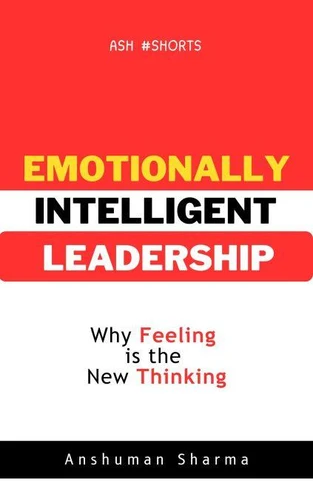
Emotionally Intelligent Leadership- Why Feeling Is the New Thinking
Par :Formats :
Disponible dans votre compte client Decitre ou Furet du Nord dès validation de votre commande. Le format ePub est :
- Compatible avec une lecture sur My Vivlio (smartphone, tablette, ordinateur)
- Compatible avec une lecture sur liseuses Vivlio
- Pour les liseuses autres que Vivlio, vous devez utiliser le logiciel Adobe Digital Edition. Non compatible avec la lecture sur les liseuses Kindle, Remarkable et Sony
 , qui est-ce ?
Notre partenaire de plateforme de lecture numérique où vous retrouverez l'ensemble de vos ebooks gratuitement
Pour en savoir plus sur nos ebooks, consultez notre aide en ligne ici
C'est si simple ! Lisez votre ebook avec l'app Vivlio sur votre tablette, mobile ou ordinateur :

- FormatePub
- ISBN8233824227
- EAN9798233824227
- Date de parution07/03/2026
- Protection num.pas de protection
- Infos supplémentairesepub
- ÉditeurLinda Balsamo
Résumé
This book is about why emotional intelligence is not a soft skill, not a nice-to-have, not the corporate equivalent of a participation trophy. It is, in the age we are currently living through, the most precise and the most powerful leadership skill available. It is what separates the leaders who build organizations that last from the leaders who build organizations that succeed briefly and then, often in ways that are difficult to trace back to their actual cause, stop.
In the age of artificial intelligence, this distinction has never been more urgent. Machines are now demonstrably superior at analysis, pattern recognition, data processing, and the execution of complex logical tasks. The leaders who continue to define their value through cognitive prowess alone are competing with systems that outperform them on those dimensions and cost a fraction of their salary.
The leaders who define their value through their capacity for genuine human connection, emotional understanding, and the creation of the conditions under which other human beings do their best work: those leaders are not competing with machines. They are doing something machines cannot do. Feeling is not the opposite of thinking. In the most important leadership moments, feeling is the most sophisticated form of thinking available.
This book is the argument for that claim, and the practical guide to building the capabilities it requires.
In the age of artificial intelligence, this distinction has never been more urgent. Machines are now demonstrably superior at analysis, pattern recognition, data processing, and the execution of complex logical tasks. The leaders who continue to define their value through cognitive prowess alone are competing with systems that outperform them on those dimensions and cost a fraction of their salary.
The leaders who define their value through their capacity for genuine human connection, emotional understanding, and the creation of the conditions under which other human beings do their best work: those leaders are not competing with machines. They are doing something machines cannot do. Feeling is not the opposite of thinking. In the most important leadership moments, feeling is the most sophisticated form of thinking available.
This book is the argument for that claim, and the practical guide to building the capabilities it requires.
A propos de Anshuman Sharma

2,99 €


3,49 €