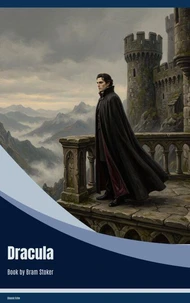
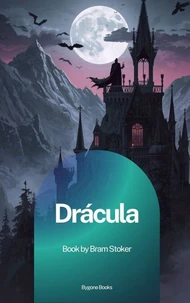
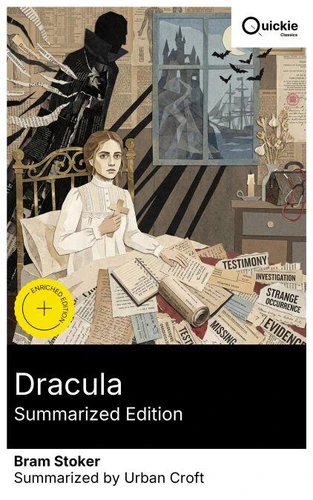
Dracula unfolds through diaries, letters, telegrams, a ship's log, and phonograph transcripts, assembling a mosaic of testimony that drives its relentless suspense from Transylvania to Whitby and London. Stoker fuses high Gothic atmosphere with the apparatus of modernity-typewriters, rail timetables, and experimental blood transfusions-stage-managing a polyphonic hunt for an elusive predator. The novel channels late-Victorian anxieties about degeneration, sexuality, and "reverse colonization, " balancing scientific rationalism with folklore as Van Helsing, Mina, and their cohort confront a foreign, mobile aristocrat who weaponizes secrecy and contagion.
Bram Stoker, Dublin-born and educated at Trinity College, combined a disciplined civil-service mind with decades as Henry Irving's manager at London's Lyceum Theatre, honing a dramatist's sense of pacing and spectacle. His Whitby sojourn and meticulous notebooks-fed by travel guides, medical journals, and Emily Gerard's account of Transylvanian superstitions-supplied the novel's geography and lore.
The result, published in 1897, synthesizes theatrical set pieces with contemporary debates on criminology, psychology, and technology, reflecting an author fascinated by how modern record-keeping might battle the uncanny. Recommended for readers of Gothic fiction, cultural historians, and thriller enthusiasts alike, Dracula remains a brisk, unsettling study of modernity besieged-at once page-turning entertainment and a touchstone for interpreting our archival age.
Quickie Classics summarizes timeless works with precision, preserving the author's voice and keeping the prose clear, fast, and readable-distilled, never diluted.
Enriched Edition extras: Introduction · Synopsis · Historical Context · Author Biography · Brief Analysis · 4 Reflection Q&As · Editorial Footnotes.
Dracula unfolds through diaries, letters, telegrams, a ship's log, and phonograph transcripts, assembling a mosaic of testimony that drives its relentless suspense from Transylvania to Whitby and London. Stoker fuses high Gothic atmosphere with the apparatus of modernity-typewriters, rail timetables, and experimental blood transfusions-stage-managing a polyphonic hunt for an elusive predator. The novel channels late-Victorian anxieties about degeneration, sexuality, and "reverse colonization, " balancing scientific rationalism with folklore as Van Helsing, Mina, and their cohort confront a foreign, mobile aristocrat who weaponizes secrecy and contagion.
Bram Stoker, Dublin-born and educated at Trinity College, combined a disciplined civil-service mind with decades as Henry Irving's manager at London's Lyceum Theatre, honing a dramatist's sense of pacing and spectacle. His Whitby sojourn and meticulous notebooks-fed by travel guides, medical journals, and Emily Gerard's account of Transylvanian superstitions-supplied the novel's geography and lore.
The result, published in 1897, synthesizes theatrical set pieces with contemporary debates on criminology, psychology, and technology, reflecting an author fascinated by how modern record-keeping might battle the uncanny. Recommended for readers of Gothic fiction, cultural historians, and thriller enthusiasts alike, Dracula remains a brisk, unsettling study of modernity besieged-at once page-turning entertainment and a touchstone for interpreting our archival age.
Quickie Classics summarizes timeless works with precision, preserving the author's voice and keeping the prose clear, fast, and readable-distilled, never diluted.
Enriched Edition extras: Introduction · Synopsis · Historical Context · Author Biography · Brief Analysis · 4 Reflection Q&As · Editorial Footnotes.

 , qui est-ce ?