
KARMEN-ITA is an Italian author and artist. Her work moves freely across different forms of expression - writing, visual art, and storytelling - always in search of the essential.
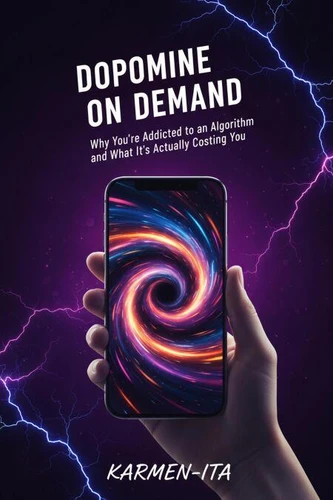
Dopamine On Demand
Par :Formats :
Disponible dans votre compte client Decitre ou Furet du Nord dès validation de votre commande. Le format ePub est :
- Compatible avec une lecture sur My Vivlio (smartphone, tablette, ordinateur)
- Compatible avec une lecture sur liseuses Vivlio
- Pour les liseuses autres que Vivlio, vous devez utiliser le logiciel Adobe Digital Edition. Non compatible avec la lecture sur les liseuses Kindle, Remarkable et Sony
 , qui est-ce ?
Notre partenaire de plateforme de lecture numérique où vous retrouverez l'ensemble de vos ebooks gratuitement
Pour en savoir plus sur nos ebooks, consultez notre aide en ligne ici
C'est si simple ! Lisez votre ebook avec l'app Vivlio sur votre tablette, mobile ou ordinateur :

- FormatePub
- ISBN8235003330
- EAN9798235003330
- Date de parution31/05/2026
- Protection num.pas de protection
- Infos supplémentairesepub
- ÉditeurIoakim Ioakim
Résumé
Every time you pick up your phone, a system engineered by some of the most talented behavioral scientists of the last generation makes a series of decisions about what you see, in what order, at what emotional intensity, and for how long. The system is not neutral. It is not a tool. It is an environment - built to capture your attention, hold it against your own intentions, and convert it into advertising revenue.
You were never the user. You were always the product. Dopamine On Demand traces the full arc of the attention economy - from the business model that created it, to the algorithmic machinery that runs it, to the specific and measurable costs it has imposed on attention, relationships, mental health, and the quality of daily life for billions of people. This is not a detox manual. It is not an argument for throwing your phone into the nearest body of water.
It is something more useful: an honest, precise, and occasionally uncomfortable account of what the system is, how it works, and what reclaiming your attention actually looks like in practice. By the time you finish this, you will understand exactly how the system works, exactly what it has cost you, and exactly what you can do about it. The algorithm is not going to like this book. That's probably the best endorsement it could have.
You were never the user. You were always the product. Dopamine On Demand traces the full arc of the attention economy - from the business model that created it, to the algorithmic machinery that runs it, to the specific and measurable costs it has imposed on attention, relationships, mental health, and the quality of daily life for billions of people. This is not a detox manual. It is not an argument for throwing your phone into the nearest body of water.
It is something more useful: an honest, precise, and occasionally uncomfortable account of what the system is, how it works, and what reclaiming your attention actually looks like in practice. By the time you finish this, you will understand exactly how the system works, exactly what it has cost you, and exactly what you can do about it. The algorithm is not going to like this book. That's probably the best endorsement it could have.
A propos de KARMEN-ITA

Maschere della Natura
E-book
7,99 €

The Oracle of Absence
E-book
7,99 €

7,99 €

8,99 €

7,99 €

8,99 €

7,99 €
7,99 €

Mandato dal Cielo
E-book
8,99 €
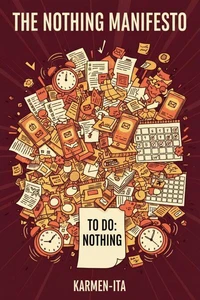
The Nothing Manifesto
E-book
6,99 €

The Made in Italy Story
E-book
8,99 €

Darkness in Plain Sight
E-book
8,99 €

Il Male in Bella Vista
E-book
8,99 €
6,99 €

7,99 €
8,99 €

8,99 €

Memento Mori
E-book
6,99 €
6,99 €