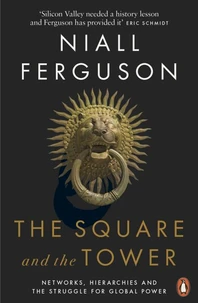
Niall Ferguson is one of Britain's most renowned historians. He is the Milbank Family Senior Fellow at the Hoover Institution, Stanford University, a senior faculty fellow of the Belfer Center for Science and International Affairs at Harvard, and a visiting professor at Tsinghua University, Beijing. His most recent book is The Square and the Tower.
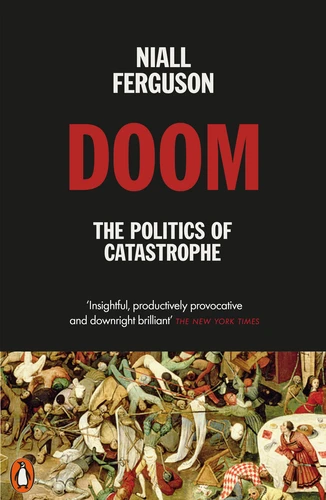
Doom: The Politics of Catastrophe
Par :Formats :
Disponible dans votre compte client Decitre ou Furet du Nord dès validation de votre commande. Le format ePub protégé est :
- Compatible avec une lecture sur My Vivlio (smartphone, tablette, ordinateur)
- Compatible avec une lecture sur liseuses Vivlio
- Pour les liseuses autres que Vivlio, vous devez utiliser le logiciel Adobe Digital Edition. Non compatible avec la lecture sur les liseuses Kindle, Remarkable et Sony
- Non compatible avec un achat hors France métropolitaine
 , qui est-ce ?
Notre partenaire de plateforme de lecture numérique où vous retrouverez l'ensemble de vos ebooks gratuitement
Pour en savoir plus sur nos ebooks, consultez notre aide en ligne ici
C'est si simple ! Lisez votre ebook avec l'app Vivlio sur votre tablette, mobile ou ordinateur :

- Nombre de pages512
- FormatePub
- ISBN978-0-14-199556-4
- EAN9780141995564
- Date de parution06/05/2021
- Protection num.Adobe DRM
- Infos supplémentairesepub
- ÉditeurPENGUIN
Résumé
'Magisterial ... Immensely readable' Douglas Alexander, Financial Times'Insightful, productively provocative and downright brilliant' New York Times A compelling history of catastrophes and their consequences, from 'the most brilliant British historian of his generation' (The Times) Disasters are inherently hard to predict. But when catastrophe strikes, we ought to be better prepared than the Romans were when Vesuvius erupted or medieval Italians when the Black Death struck.
We have science on our side, after all. Yet the responses of many developed countries to a new pathogen from China were badly bungled. Why? While populist rulers certainly performed poorly in the face of the pandemic, Niall Ferguson argues that more profound pathologies were at work - pathologies already visible in our responses to earlier disasters. Drawing from multiple disciplines, including economics and network science, Doom: The Politics of Catastrophe offers not just a history but a general theory of disaster.
As Ferguson shows, governments must learn to become less bureaucratic if we are to avoid the impending doom of irreversible decline. 'Stimulating, thought-provoking ... Readers will find much to relish' Martin Bentham, Evening Standard
We have science on our side, after all. Yet the responses of many developed countries to a new pathogen from China were badly bungled. Why? While populist rulers certainly performed poorly in the face of the pandemic, Niall Ferguson argues that more profound pathologies were at work - pathologies already visible in our responses to earlier disasters. Drawing from multiple disciplines, including economics and network science, Doom: The Politics of Catastrophe offers not just a history but a general theory of disaster.
As Ferguson shows, governments must learn to become less bureaucratic if we are to avoid the impending doom of irreversible decline. 'Stimulating, thought-provoking ... Readers will find much to relish' Martin Bentham, Evening Standard