
Author
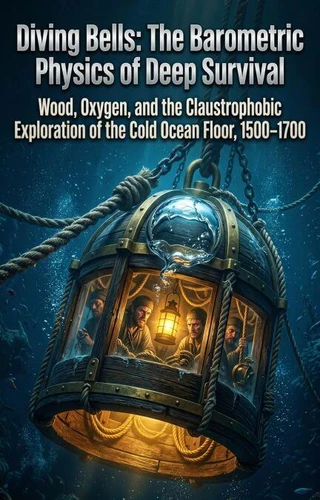
Diving Bells: The Barometric Physics of Deep Survival. Wood, Oxygen, and the Claustrophobic Exploration of the Cold Ocean Floor, 1500–1700
Par :Formats :
Disponible dans votre compte client Decitre ou Furet du Nord dès validation de votre commande. Le format ePub est :
- Compatible avec une lecture sur My Vivlio (smartphone, tablette, ordinateur)
- Compatible avec une lecture sur liseuses Vivlio
- Pour les liseuses autres que Vivlio, vous devez utiliser le logiciel Adobe Digital Edition. Non compatible avec la lecture sur les liseuses Kindle, Remarkable et Sony
 , qui est-ce ?
Notre partenaire de plateforme de lecture numérique où vous retrouverez l'ensemble de vos ebooks gratuitement
Pour en savoir plus sur nos ebooks, consultez notre aide en ligne ici
C'est si simple ! Lisez votre ebook avec l'app Vivlio sur votre tablette, mobile ou ordinateur :

- Nombre de pages138
- FormatePub
- ISBN978-3-565-55416-4
- EAN9783565554164
- Date de parution10/07/2026
- Protection num.pas de protection
- Taille766 Ko
- Infos supplémentairesepub
- ÉditeurEmphaloz Publishing House
Résumé
Centuries before the invention of scuba gear or pressurized submarines, maritime empires were desperate to salvage cannons, gold, and cargo from sunken galleons. Their solution was as mathematically brilliant as it was utterly terrifying: the diving bell.
Lowering an open-bottomed wooden chamber into the sea created a trapped pocket of breathable air, allowing divers to work on the ocean floor.
However, the physics of barometric pressure turned these bells into deadly traps. As the chamber descended, the immense weight of the ocean compressed the air volume, allowing freezing water to rise rapidly around the occupants' waists. Furthermore, early pioneers did not fully understand the silent accumulation of carbon dioxide. Divers had to rely on a precarious supply chain of weighted barrels sent down from the surface, maneuvering them to release fresh oxygen into the bell before they succumbed to asphyxiation in the dark. This investigation explores the severe physiological and mechanical limits of early underwater salvage.
It highlights the desperate courage of the first human beings who successfully engineered a way to breathe beneath the crushing weight of the sea.
However, the physics of barometric pressure turned these bells into deadly traps. As the chamber descended, the immense weight of the ocean compressed the air volume, allowing freezing water to rise rapidly around the occupants' waists. Furthermore, early pioneers did not fully understand the silent accumulation of carbon dioxide. Divers had to rely on a precarious supply chain of weighted barrels sent down from the surface, maneuvering them to release fresh oxygen into the bell before they succumbed to asphyxiation in the dark. This investigation explores the severe physiological and mechanical limits of early underwater salvage.
It highlights the desperate courage of the first human beings who successfully engineered a way to breathe beneath the crushing weight of the sea.
A propos de Nora Caldwell






0,99 €










1,99 €



1,99 €