SOLDES
Jusqu'à -70% sur une sélection d'articles*

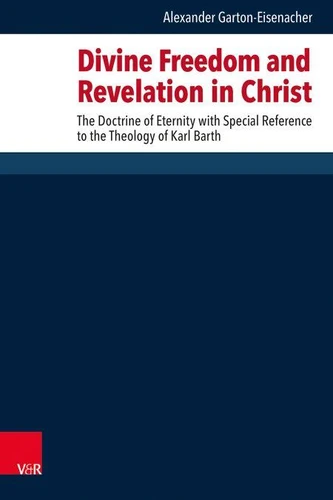
Divine Freedom and Revelation in Christ. The Doctrine of Eternity with Special Reference to the Theology of Karl Barth
Par : , , ,Formats :
Disponible dans votre compte client Decitre ou Furet du Nord dès validation de votre commande. Le format PDF est :
- Compatible avec une lecture sur My Vivlio (smartphone, tablette, ordinateur)
- Compatible avec une lecture sur liseuses Vivlio
- Pour les liseuses autres que Vivlio, vous devez utiliser le logiciel Adobe Digital Edition. Non compatible avec la lecture sur les liseuses Kindle, Remarkable et Sony
 , qui est-ce ?
Notre partenaire de plateforme de lecture numérique où vous retrouverez l'ensemble de vos ebooks gratuitement
Pour en savoir plus sur nos ebooks, consultez notre aide en ligne ici
C'est si simple ! Lisez votre ebook avec l'app Vivlio sur votre tablette, mobile ou ordinateur :

- Nombre de pages204
- FormatPDF
- ISBN978-3-647-56735-8
- EAN9783647567358
- Date de parution12/12/2022
- Protection num.pas de protection
- Taille3 Mo
- Infos supplémentairespdf
- ÉditeurVandenhoeck & Ruprecht
Résumé
Christianity claims that the incarnation provides reliable knowledge about God but also that the incarnation was undertaken freely and thus need not have happened. Alexander Garton-Eisenacher resolves this tension between epistemological reliability and divine freedom, building particularly from the work of Karl Barth. Garton-Eisenacher offers a fresh reading of the Church Dogmatics that demonstrates how Barth's theology provides a promising starting point but notes that his argument is ultimately undermined by the doctrine of eternity within which it is framed.
The author overcomes this issue by showing how the promising motifs employed by Barth can be authentically derived from the classical doctrine of eternity instead. In so doing, this work shows that reading classical eternity against a Barthian background also serves to draw out a more temporal interpretation of the doctrine than its contemporary characterization, reclaiming it as a viable Christian understanding of God's relationship to time.
The author overcomes this issue by showing how the promising motifs employed by Barth can be authentically derived from the classical doctrine of eternity instead. In so doing, this work shows that reading classical eternity against a Barthian background also serves to draw out a more temporal interpretation of the doctrine than its contemporary characterization, reclaiming it as a viable Christian understanding of God's relationship to time.