SOLDES
Jusqu'à -70% sur une sélection d'articles*

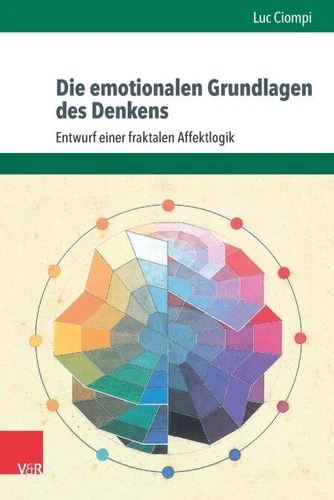
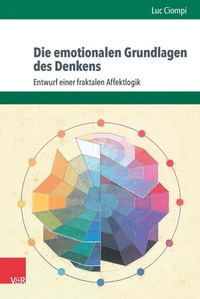
Die emotionalen Grundlagen des Denkens. Entwurf einer fraktalen Affektlogik
Par :Formats :
Disponible dans votre compte client Decitre ou Furet du Nord dès validation de votre commande. Le format ePub est :
- Compatible avec une lecture sur My Vivlio (smartphone, tablette, ordinateur)
- Compatible avec une lecture sur liseuses Vivlio
- Pour les liseuses autres que Vivlio, vous devez utiliser le logiciel Adobe Digital Edition. Non compatible avec la lecture sur les liseuses Kindle, Remarkable et Sony
 , qui est-ce ?
Notre partenaire de plateforme de lecture numérique où vous retrouverez l'ensemble de vos ebooks gratuitement
Pour en savoir plus sur nos ebooks, consultez notre aide en ligne ici
C'est si simple ! Lisez votre ebook avec l'app Vivlio sur votre tablette, mobile ou ordinateur :

- Nombre de pages376
- FormatePub
- ISBN978-3-647-99803-9
- EAN9783647998039
- Date de parution15/08/2016
- Protection num.pas de protection
- Taille2 Mo
- Infos supplémentairesepub
- ÉditeurVandenhoeck & Ruprecht
Résumé
Human thought, both individual and collective, is continually being reorganised and influenced by the complex interactions of emotions and cognitions. In order to understand these self-creating processes it is no longer sufficient to simply look for the causes. Likewise cybernetic models, which can describe and simulate interactions, do not have the ability of self-conception and they can lead only to repetitive self-reproduction - to fractal aesthetics.
New, and for the first time in the history of thinking about human thought, is that philosophy, psychology (as the science of human experience), and the newest results from neurobiology do not line up beside each other or point out each other´s faults. In this radically new way of looking at things, they not only complement each other, but are rather intertwined: they confirm each other. The perception of fractal self-organisation dissolves all contradictions.
Chaos - once it has been perceived as chaos - reveals itself to be the new and pioneering combination of emotion and cognition. In this volume Luc Ciompi combines what has heretofore been intractably scattered about in outdated images. Our fear of chaos has forced us to see human thought as something from the material world that either rules us or is highly dependent. Ciompi advances us further to the new age: If we can accept chaos as an elementary fact in our world of emotion, thought and behaviour, we can finally understand its logic - the logic of higher order.
This is a creative insight: Self-inventive and sensual humans live within their feelings and thoughts, and it is only with passion and creativity that we can learn to understand ourselves.
New, and for the first time in the history of thinking about human thought, is that philosophy, psychology (as the science of human experience), and the newest results from neurobiology do not line up beside each other or point out each other´s faults. In this radically new way of looking at things, they not only complement each other, but are rather intertwined: they confirm each other. The perception of fractal self-organisation dissolves all contradictions.
Chaos - once it has been perceived as chaos - reveals itself to be the new and pioneering combination of emotion and cognition. In this volume Luc Ciompi combines what has heretofore been intractably scattered about in outdated images. Our fear of chaos has forced us to see human thought as something from the material world that either rules us or is highly dependent. Ciompi advances us further to the new age: If we can accept chaos as an elementary fact in our world of emotion, thought and behaviour, we can finally understand its logic - the logic of higher order.
This is a creative insight: Self-inventive and sensual humans live within their feelings and thoughts, and it is only with passion and creativity that we can learn to understand ourselves.