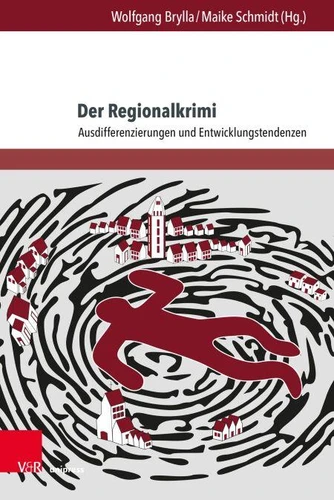
Heutzutage gibt es keine sicheren Orte mehr. Das Verbrechen lauert hinter jedem Mietshaus und jeder Scheune. Gemordet wird in der Nachbarwohnung, vor der Kirchentür, in der Shisha-Bar oder auf dem Kartoffelacker. Gesetzesverstöße haben sich in räumlicher Hinsicht sozusagen emanzipiert, was man auch in dem literarischen Universum des Kriminalromans beobachten kann. Großstädte, die seit jeher als Brutstätten des Bösen galten, bekamen spätestens seit den 1980er Jahren starke Konkurrenz in Form der kriminellen Provinz, die den Metropolen den Rang als Sündenräume schlechthin ablaufen möchte.
Denn die Region impliziert bei weitem nicht mehr nur Geborgenheit und Abschottung vor der brutalen Außenwelt; die Region bedeutet Blutvergießen und Gewalttaten, die im Regionalkrimi narrativ verhandelt werden. Das Ziel des vorliegenden Sammelbandes besteht darin, diesen literarischen Verbrechensmodi narrativ zu Leibe zu rücken.
There are no safe places these days. Crime lurks behind every apartment building and every barn.
Murders are committed in neighbouring apartments, outside church doors, in shisha bars or in potato fields. From a spatial perspective, lawbreaking has emancipated itself - so to speak. This can also be observed in the literary universe of crime novels. Since the 1980s large cities, which have always been regarded as hotbeds of evil, have had strong competition from the criminal province, outstripping the metropolises as sin spaces par excellence.
However, the province no longer implies security and isolation from the brutal outside world. The province stands for bloodshed and acts of violence, which are narratively negotiated in local crime novels. The aim of this volume is to get to the heart of these literary modes of crime from a narrative perspective.
Heutzutage gibt es keine sicheren Orte mehr. Das Verbrechen lauert hinter jedem Mietshaus und jeder Scheune. Gemordet wird in der Nachbarwohnung, vor der Kirchentür, in der Shisha-Bar oder auf dem Kartoffelacker. Gesetzesverstöße haben sich in räumlicher Hinsicht sozusagen emanzipiert, was man auch in dem literarischen Universum des Kriminalromans beobachten kann. Großstädte, die seit jeher als Brutstätten des Bösen galten, bekamen spätestens seit den 1980er Jahren starke Konkurrenz in Form der kriminellen Provinz, die den Metropolen den Rang als Sündenräume schlechthin ablaufen möchte.
Denn die Region impliziert bei weitem nicht mehr nur Geborgenheit und Abschottung vor der brutalen Außenwelt; die Region bedeutet Blutvergießen und Gewalttaten, die im Regionalkrimi narrativ verhandelt werden. Das Ziel des vorliegenden Sammelbandes besteht darin, diesen literarischen Verbrechensmodi narrativ zu Leibe zu rücken.
There are no safe places these days. Crime lurks behind every apartment building and every barn.
Murders are committed in neighbouring apartments, outside church doors, in shisha bars or in potato fields. From a spatial perspective, lawbreaking has emancipated itself - so to speak. This can also be observed in the literary universe of crime novels. Since the 1980s large cities, which have always been regarded as hotbeds of evil, have had strong competition from the criminal province, outstripping the metropolises as sin spaces par excellence.
However, the province no longer implies security and isolation from the brutal outside world. The province stands for bloodshed and acts of violence, which are narratively negotiated in local crime novels. The aim of this volume is to get to the heart of these literary modes of crime from a narrative perspective.