- Accueil /
- Maike Schmidt
Maike Schmidt

Dernière sortie
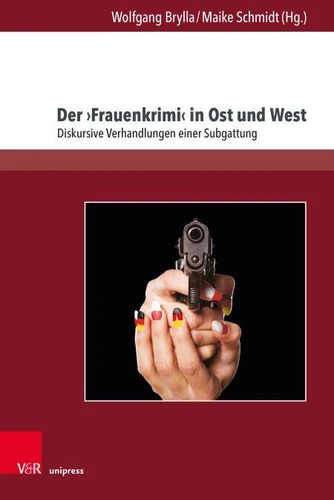
Der ›Frauenkrimi‹ in Ost und West
Die (Sub-)Gattung >Frauenkrimi< gilt als Erfindung der Verlagspolitik und Literaturkritik der 1980er Jahre, im 21. Jahrhundert verschwand sie allerdings (fast völlig) aus den Verlagsprogrammen. Wie jede kriminalliterarische Form durchlief auch der >Frauenkrimi< viele Entwicklungsstufen, versuchte sich als (weibliches) Gesellschaftssprachrohr und spiegelte die sich verändernden Wirklichkeitsverhältnisse wider, bis er sich im Zuge der Feminismus-Debatten nicht mehr als salonfähig erwies.
Wohlgemerkt als Begriff, weniger als kriminalästhetisches Narrativ, denn auch heute werden in West- und Osteuropa >Frauenkrimis< verfasst, die man jedoch nicht mehr als solche labelt. Das Ziel des vorliegenden Sammelbandes ist die (Sub-)Gattung anhand von exemplarischen Textanalysen zu konturieren. Women's crime fiction as a (sub) genre is an invention of literary criticism and the publishing industry of the 1980s.
In the 21st century it has almost completely disappeared from publishing agendas. Like other forms of detective fiction, women's crime fiction went through many stages of development. It tried to serve as a social mouthpiece for women's issues, it reflected the changing reality, only to finally be recognized as a relic by the feminist debate - as a concept, not as a crime narrative, because today, both in Western and Eastern Europe, women's crime fiction is still written, however, it isn't referred to as "feminine".
The purpose of analyzing the examples of women's crime fiction collected in this volume is to describe the aforementioned (sub)genre.
Wohlgemerkt als Begriff, weniger als kriminalästhetisches Narrativ, denn auch heute werden in West- und Osteuropa >Frauenkrimis< verfasst, die man jedoch nicht mehr als solche labelt. Das Ziel des vorliegenden Sammelbandes ist die (Sub-)Gattung anhand von exemplarischen Textanalysen zu konturieren. Women's crime fiction as a (sub) genre is an invention of literary criticism and the publishing industry of the 1980s.
In the 21st century it has almost completely disappeared from publishing agendas. Like other forms of detective fiction, women's crime fiction went through many stages of development. It tried to serve as a social mouthpiece for women's issues, it reflected the changing reality, only to finally be recognized as a relic by the feminist debate - as a concept, not as a crime narrative, because today, both in Western and Eastern Europe, women's crime fiction is still written, however, it isn't referred to as "feminine".
The purpose of analyzing the examples of women's crime fiction collected in this volume is to describe the aforementioned (sub)genre.

Die (Sub-)Gattung >Frauenkrimi< gilt als Erfindung der Verlagspolitik und Literaturkritik der 1980er Jahre, im 21. Jahrhundert verschwand sie allerdings (fast völlig) aus den Verlagsprogrammen. Wie jede kriminalliterarische Form durchlief auch der >Frauenkrimi< viele Entwicklungsstufen, versuchte sich als (weibliches) Gesellschaftssprachrohr und spiegelte die sich verändernden Wirklichkeitsverhältnisse wider, bis er sich im Zuge der Feminismus-Debatten nicht mehr als salonfähig erwies.
Wohlgemerkt als Begriff, weniger als kriminalästhetisches Narrativ, denn auch heute werden in West- und Osteuropa >Frauenkrimis< verfasst, die man jedoch nicht mehr als solche labelt. Das Ziel des vorliegenden Sammelbandes ist die (Sub-)Gattung anhand von exemplarischen Textanalysen zu konturieren. Women's crime fiction as a (sub) genre is an invention of literary criticism and the publishing industry of the 1980s.
In the 21st century it has almost completely disappeared from publishing agendas. Like other forms of detective fiction, women's crime fiction went through many stages of development. It tried to serve as a social mouthpiece for women's issues, it reflected the changing reality, only to finally be recognized as a relic by the feminist debate - as a concept, not as a crime narrative, because today, both in Western and Eastern Europe, women's crime fiction is still written, however, it isn't referred to as "feminine".
The purpose of analyzing the examples of women's crime fiction collected in this volume is to describe the aforementioned (sub)genre.

Wohlgemerkt als Begriff, weniger als kriminalästhetisches Narrativ, denn auch heute werden in West- und Osteuropa >Frauenkrimis< verfasst, die man jedoch nicht mehr als solche labelt. Das Ziel des vorliegenden Sammelbandes ist die (Sub-)Gattung anhand von exemplarischen Textanalysen zu konturieren. Women's crime fiction as a (sub) genre is an invention of literary criticism and the publishing industry of the 1980s.
In the 21st century it has almost completely disappeared from publishing agendas. Like other forms of detective fiction, women's crime fiction went through many stages of development. It tried to serve as a social mouthpiece for women's issues, it reflected the changing reality, only to finally be recognized as a relic by the feminist debate - as a concept, not as a crime narrative, because today, both in Western and Eastern Europe, women's crime fiction is still written, however, it isn't referred to as "feminine".
The purpose of analyzing the examples of women's crime fiction collected in this volume is to describe the aforementioned (sub)genre.
Les livres de Maike Schmidt

»Refugium einer politikfreien Sphäre«?. Musik und Gesellschaft im Rheinland des 19. und 20. Jahrhunderts
Helmut Rönz, Martin Schlemmer, Maike Schmidt, Andreas Altenhoff, Simone Bornemann
E-book
35,00 €

Photovoltaik erfolgreich gestalten. Leitfaden für Kommunen
Michael Frey, Gerd Hager, Till Jenssen, Volker Kienzlen, Maike Schmidt
E-book
44,99 €

Der Regionalkrimi. Ausdifferenzierungen und Entwicklungstendenzen
Wolfgang Brylla, Maike Schmidt, Hanspeter Affolter, Bruno Arich-Gerz, Sandra Beck
E-book
59,00 €
