
Dr. Nouridin Melo, a leading critic of digital colonialism, reveals how algorithms and data have become the new weapons of empire. From exploited votes to indigenous sovereignty, this groundbreaking work provides the tools not just to understand the system, but to dismantle it.
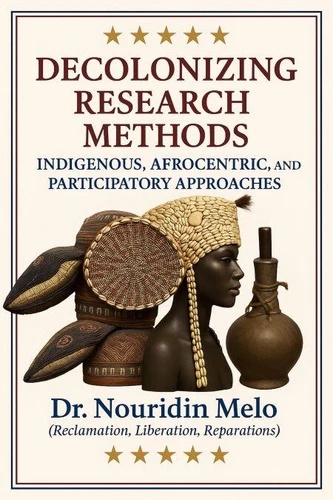
Decolonizing Research Methods: Indigenous, Afrocentric, and Participatory Approaches
Par :Formats :
Disponible dans votre compte client Decitre ou Furet du Nord dès validation de votre commande. Le format ePub est :
- Compatible avec une lecture sur My Vivlio (smartphone, tablette, ordinateur)
- Compatible avec une lecture sur liseuses Vivlio
- Pour les liseuses autres que Vivlio, vous devez utiliser le logiciel Adobe Digital Edition. Non compatible avec la lecture sur les liseuses Kindle, Remarkable et Sony
 , qui est-ce ?
Notre partenaire de plateforme de lecture numérique où vous retrouverez l'ensemble de vos ebooks gratuitement
Pour en savoir plus sur nos ebooks, consultez notre aide en ligne ici
C'est si simple ! Lisez votre ebook avec l'app Vivlio sur votre tablette, mobile ou ordinateur :

- FormatePub
- ISBN8231245246
- EAN9798231245246
- Date de parution30/04/2024
- Protection num.pas de protection
- Infos supplémentairesepub
- ÉditeurWalzone Press
Résumé
Description for Decolonizing Research Methods: Indigenous, Afrocentric, and Participatory Approaches Decolonizing Research Methods: Indigenous, Afrocentric, and Participatory Approaches by Dr. Nouridin Melo is a groundbreaking guide that dismantles colonial legacies in academia while centering marginalized epistemologies. This urgent work challenges Western research paradigms that perpetuate epistemic violence, offering instead ethical, relational frameworks rooted in Indigenous wisdom, Afrocentric philosophy, and grassroots activism.
Key Features: Transformative Methodologies: Explore Indigenous storywork, Ubuntu ethics, Participatory Action Research (PAR), and decolonial AI, bridging ancient wisdom with modern justice-driven inquiry. Global Case Studies: From Zapatista autonomous education in Mexico to the recovery of the Timbuktu Manuscripts in Mali, witness how communities reclaim sovereignty over knowledge production. Practical Tools: Equip scholars, educators, and activists with actionable strategies to reject extractive research, center marginalized voices, and foster social transformation.
Interdisciplinary Relevance: Vital for social sciences, education, anthropology, and tech ethics, this book redefines rigor through critical pedagogy and pluriversal epistemologies. Dr. Melo, an economist and political analyst, merges rigorous scholarship with lived experience, advocating for research as a liberatory practice. Whether dismantling algorithmic bias or revitalizing Indigenous languages, this book is a compass for those committed to justice, equity, and epistemological diversity.
Ideal For: Academics redesigning curricula or methodologies Community organizers building participatory projects Policymakers and technologists crafting ethical solutions Students pursuing decolonial, anti-racist scholarship A manifesto and manual in one, this book is essential reading for anyone ready to unlearn colonial habits and co-create knowledge that heals, empowers, and transforms.
Key Features: Transformative Methodologies: Explore Indigenous storywork, Ubuntu ethics, Participatory Action Research (PAR), and decolonial AI, bridging ancient wisdom with modern justice-driven inquiry. Global Case Studies: From Zapatista autonomous education in Mexico to the recovery of the Timbuktu Manuscripts in Mali, witness how communities reclaim sovereignty over knowledge production. Practical Tools: Equip scholars, educators, and activists with actionable strategies to reject extractive research, center marginalized voices, and foster social transformation.
Interdisciplinary Relevance: Vital for social sciences, education, anthropology, and tech ethics, this book redefines rigor through critical pedagogy and pluriversal epistemologies. Dr. Melo, an economist and political analyst, merges rigorous scholarship with lived experience, advocating for research as a liberatory practice. Whether dismantling algorithmic bias or revitalizing Indigenous languages, this book is a compass for those committed to justice, equity, and epistemological diversity.
Ideal For: Academics redesigning curricula or methodologies Community organizers building participatory projects Policymakers and technologists crafting ethical solutions Students pursuing decolonial, anti-racist scholarship A manifesto and manual in one, this book is essential reading for anyone ready to unlearn colonial habits and co-create knowledge that heals, empowers, and transforms.
A propos de Dr. nouridin melo


13,99 €


10,99 €


