SOLDES
Jusqu'à -70% sur une sélection d'articles*

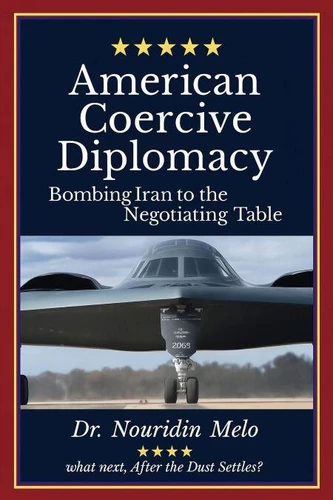
American Coercive Diplomacy: Bombing Iran to the Negotiating Table
Par :Formats :
Disponible dans votre compte client Decitre ou Furet du Nord dès validation de votre commande. Le format ePub est :
- Compatible avec une lecture sur My Vivlio (smartphone, tablette, ordinateur)
- Compatible avec une lecture sur liseuses Vivlio
- Pour les liseuses autres que Vivlio, vous devez utiliser le logiciel Adobe Digital Edition. Non compatible avec la lecture sur les liseuses Kindle, Remarkable et Sony
 , qui est-ce ?
Notre partenaire de plateforme de lecture numérique où vous retrouverez l'ensemble de vos ebooks gratuitement
Pour en savoir plus sur nos ebooks, consultez notre aide en ligne ici
C'est si simple ! Lisez votre ebook avec l'app Vivlio sur votre tablette, mobile ou ordinateur :

- FormatePub
- ISBN8231490837
- EAN9798231490837
- Date de parution23/06/2025
- Protection num.pas de protection
- Infos supplémentairesepub
- ÉditeurWalzone Press
Résumé
USA Coercive Diplomacy: Bombing Iran to the Negotiating Table is a gripping exploration of America's high-risk strategy to halt Iran's nuclear program through military force. Structured in four parts, the book meticulously analyzes the 2025 airstrikes, why they happened, how they were executed, and what they achieved. Part I lays the groundwork, defining coercive diplomacy and distinguishing it from outright war.
It examines historical cases, from the Cuban Missile Crisis to modern interventions, to identify the conditions under which threats succeed or fail. Part II delves into the Iran nuclear crisis, tracing its origins, diplomatic deadlocks, and the pivotal intelligence that pushed the U. S. toward military action. It reveals the strategic calculus behind target selection and the delicate balance between inflicting enough damage to compel compliance while avoiding all-out war.
Part III provides a blow-by-blow account of the June 21, 2025, strikes, the stealth bombers, bunker-busting munitions, and Iran's furious response. It captures the global shockwaves, from oil price spikes to regional unrest, as the world held its breath. Part IV assesses the aftermath. Did the strikes force Iran back to negotiations, or did they ignite a dangerous new phase of conflict? The book concludes with critical lessons for future coercive strategies, when they might work, when they risk catastrophe, and whether there's ever a truly clean victory in the realm of high-stakes diplomacy.
Provocative, meticulously researched, and timely, this book is an indispensable guide to understanding the limits of power in an age where diplomacy and destruction walk a razor's edge.
It examines historical cases, from the Cuban Missile Crisis to modern interventions, to identify the conditions under which threats succeed or fail. Part II delves into the Iran nuclear crisis, tracing its origins, diplomatic deadlocks, and the pivotal intelligence that pushed the U. S. toward military action. It reveals the strategic calculus behind target selection and the delicate balance between inflicting enough damage to compel compliance while avoiding all-out war.
Part III provides a blow-by-blow account of the June 21, 2025, strikes, the stealth bombers, bunker-busting munitions, and Iran's furious response. It captures the global shockwaves, from oil price spikes to regional unrest, as the world held its breath. Part IV assesses the aftermath. Did the strikes force Iran back to negotiations, or did they ignite a dangerous new phase of conflict? The book concludes with critical lessons for future coercive strategies, when they might work, when they risk catastrophe, and whether there's ever a truly clean victory in the realm of high-stakes diplomacy.
Provocative, meticulously researched, and timely, this book is an indispensable guide to understanding the limits of power in an age where diplomacy and destruction walk a razor's edge.
A propos de Dr. nouridin melo



13,99 €


10,99 €


